
What Causes Flickering Lights When Your Central Air Kicks On
You flip on the AC during a hot Texas afternoon, and the lights dim for a split second across the entire house. That brief flicker happens because your central air conditioner pulls a massive surge of electricity the moment its compressor starts up. While a slight dimming can be normal, repeated or severe flickering points to a real electrical problem that deserves attention. Loose connections, overloaded circuits, and aging electrical panels are the usual suspects behind this issue. Ignoring the warning signs can lead to damaged appliances, scorched wiring, or even electrical fires. Understanding what causes flickering lights during AC startup helps you decide when to call a licensed electrician. Risen Power Electric serves homeowners across Lone Oak and the surrounding North Texas area with expert diagnostics and repairs.
Why Your Lights Flicker When the Central Air Conditioner Starts
The flickering you see is directly tied to the inrush current your AC compressor demands at startup. A central air unit can pull three to seven times its normal running amperage in the first few seconds of operation. That sudden draw causes a temporary voltage drop across your home’s electrical system, which shows up as dimming lights. In a healthy electrical system, this drop is barely noticeable. When the drop is dramatic or the flickering keeps happening, something deeper is wrong with your wiring, panel, or service connection. Identifying the root cause matters because each issue requires a different fix.
The Inrush Current Behind Flickering Lights When the AC Starts
Every electric motor demands more power to start than it does to keep running, and your AC compressor is no exception. The compressor motor must overcome the resistance of refrigerant pressure and mechanical inertia, which requires a huge initial burst of current. This burst is called locked rotor amperage, and it can spike to 80 amps or more on a residential unit before settling down to its normal 15 to 25 amp running load. That spike happens in less than a second, but it places real stress on your wiring and panel during that moment.
When the spike occurs, voltage across the entire home drops briefly because the AC is competing with everything else drawing power. Lights connected to the same panel will dim in response to that voltage sag. The amount of dimming depends on how much capacity your electrical service has to absorb the spike. Homes with 100 amp service tend to show more flickering than homes with 200 amp service because there is less headroom for the inrush current.
A slight, momentary dim that happens once during startup is usually within normal limits for older homes. Flickering that lasts more than a second, repeats during running, or affects lights on circuits far from the AC indicates a problem. The severity tells you whether you are dealing with a minor quirk or a serious electrical issue. A licensed electrician can measure the actual voltage drop with specialized equipment to determine the cause. Risen Power Electric uses professional diagnostic tools to pinpoint the exact source of the flickering.

Loose Wiring Connections That Worsen Flickering Lights
Loose connections in your electrical panel, outlets, or junction boxes are one of the most dangerous causes of flickering lights during AC startup. Over years of thermal cycling, screws holding wires in place can back out, and aluminum wiring is especially prone to this issue. When a connection is loose, the contact area between the wire and the terminal shrinks, which increases electrical resistance at that point. Higher resistance creates heat, and heat creates more expansion and contraction, which loosens the connection further in a destructive cycle.
The added resistance from a loose connection amplifies any voltage drop that occurs during the AC startup surge. What might be a barely visible flicker in a properly tightened panel can become a noticeable dimming or even a brief blackout in a panel with loose lugs. You might also smell a faint plastic or burning odor near outlets or the panel, which is a serious warning sign. Discolored or warm switch plates around the home often point to the same problem. These symptoms should never be ignored because loose connections are a leading cause of residential electrical fires.
Tightening connections inside a live electrical panel is not a do-it-yourself task; the risk of shock or arc flash is extremely high. A licensed electrician will shut off power, inspect every termination, and torque connections to the manufacturer’s specifications. They will also look for signs of arcing damage, overheating, or wire fatigue that may require replacement. If you suspect loose connections are behind your flickering, contact us through our electric repair service for a thorough inspection.
Overloaded Circuits That Cause Flickering Lights During AC Startup
Your central air conditioner should always be on its own dedicated circuit, sized correctly for its amperage draw. When other appliances share the same branch circuit or pull from the same overloaded leg of the panel, the voltage sag during startup gets much worse. Refrigerators, microwaves, and electric ovens running at the same time as the AC compete for available current. This shared demand exaggerates the brief voltage drop and makes flickering more dramatic throughout the home.
Older homes often have circuits that were never designed for modern appliance loads. A 1970s panel built for window units and incandescent bulbs struggles to keep up with today’s central AC systems, electric dryers, and multiple kitchen appliances. The result is chronic flickering, breakers that trip during heat waves, and outlets that feel warm to the touch. Adding new appliances over the years without upgrading the service compounds the problem. Eventually, the panel reaches a point where normal operation creates abnormal conditions.
The fix usually involves redistributing circuits across the panel or upgrading the service entirely. An electrician will calculate your home’s actual load and compare it to the available capacity. If the panel is undersized for the demand, an electrical panel upgrade is the proper solution. A new 200 amp panel with dedicated circuits for major appliances eliminates the flickering and gives you headroom for future additions. Risen Power Electric handles panel upgrades across Lone Oak, Royse City, and the surrounding Texas communities.

How to Tell When Flickering Lights From Your AC Are Dangerous
Not every flicker means your house is about to burn down, but some signs demand immediate attention. The pattern, frequency, and severity of the flickering tell you a lot about what is happening inside your walls. A one-time dim at startup is different from constant flickering, and lights flickering throughout AC operation is different from a brief drop. Knowing the difference helps you respond appropriately and avoid costly damage. Paying attention to the smaller details often prevents major emergencies.
The Warning Signs That Flickering Lights Have Become Dangerous
Burning smells coming from outlets, switches, or the electrical panel are an emergency-level warning. That odor means insulation is melting somewhere, and an electrical fire could be minutes away. Shut off the breaker if you can safely do so, and call an emergency electrician right away. Discolored or scorched outlet covers, warm switches, or buzzing sounds from the panel are equally serious. These symptoms should never be dismissed as quirks of an old house.
Lights that flicker even when the AC is not running point to problems beyond simple inrush current. The issue could be a loose service neutral, a failing main breaker, or a problem with the utility’s service drop. A loose neutral is particularly dangerous because it can cause voltage on some circuits to surge while others drop. Surging voltage destroys electronics, motors, and LED bulbs in short order. Refrigerators, computers, and televisions are especially vulnerable to this kind of damage.
If breakers trip when the AC starts, or if multiple breakers feel hot to the touch, the panel itself may be failing. Federal Pacific Stab-Lok and Zinsco panels are well known for malfunctioning in ways that allow fires to start. Homes built between 1950 and 1990 may still have these panels installed. Replacing a failing panel is not optional; it is essential for safety. Our electrical inspection service identifies dangerous panels and other hidden hazards before they cause harm.

When Flickering Lights From the Air Conditioner Need Emergency Service
Sparking or visible arcing at any outlet, switch, or panel is a true emergency that requires immediate action. Cut power at the main breaker if you can reach it safely, and stay away from the affected area. Smoke, melting plastic, or flames mean you should evacuate and call 911 before anything else. Even small sparks indicate that a connection is breaking down and could escalate quickly. Do not attempt to investigate or fix sparking equipment yourself.
A complete loss of power on half of your home while the other half still works is another emergency sign. This pattern usually means a service neutral has failed, either inside your panel or at the utility connection. Half-power events can send 240 volts to circuits designed for 120 volts, frying appliances and starting fires. Turning off the main breaker stops further damage while you wait for help. Call a 24/7 emergency electrician immediately because the longer the condition persists, the more damage occurs.
Repeated breaker trips during AC startup also warrant emergency attention. Each trip can damage the breaker’s internal mechanism, and a worn breaker may fail to trip when it really needs to. That failure can allow a short circuit or overload to continue until wires overheat and ignite. If your AC will not start without tripping the breaker, stop trying to run it. Risen Power Electric provides 24/7 emergency electrician service throughout Lone Oak and surrounding areas for situations exactly like this.
The Voltage Issues Behind Persistent Flickering Lights
Steady-state voltage in a residential home should sit between 114 and 126 volts on each leg. Voltage outside that range means something is wrong with either your service or your panel. A voltmeter at any outlet will show you the actual reading, but interpreting the results requires training. Brief drops during AC startup are expected, but the voltage should rebound within a fraction of a second. Sustained low voltage damages compressor motors and shortens the life of every electrical device in the home.
Voltage imbalance between the two 120 volt legs in your panel is another common cause of strange flickering patterns. The two legs should carry roughly equal loads, but heavy appliances clustered on one leg create imbalance. When the AC starts on the overloaded leg, the voltage sag on that side becomes severe. Lights on the affected leg dim noticeably while lights on the other leg behave normally. Rebalancing the circuits across both legs is a common repair that eliminates this kind of flickering.
Utility-side voltage problems happen too, and your power company is responsible for fixing them. Loose connections at the meter, a failing transformer, or a degraded service drop can all cause voltage instability. An electrician can determine whether the problem is on your side of the meter or theirs. If the issue is utility-side, the electrician will document it so you can report it with confidence. Installing a whole house surge protector adds protection against voltage spikes that can accompany these utility problems.
Why You Need a Professional Electrician to Fix Flickering Lights
Flickering lights are a symptom, not a diagnosis, and finding the real cause requires testing, training, and proper equipment. Guessing at the problem or applying a quick fix often makes things worse and can put your family at risk. A licensed electrician brings the experience needed to trace the issue from the symptom back to the source. Choosing a reputable local company protects your home and gives you peace of mind. Risen Power Electric is committed to honest, thorough work for every customer.
The Professional Diagnostic Process for Flickering Lights
A professional electrician starts with a full visual inspection of your panel, service entrance, and major appliance connections. They check for signs of overheating, corrosion, discoloration, and obvious damage at every termination. Thermal imaging cameras reveal hot spots that the eye cannot see, which makes finding loose connections much faster. Voltage and amperage measurements taken during AC startup show exactly how much your system sags under load. These tools turn a guessing game into a precise diagnosis.
After the initial inspection, the electrician verifies that the AC is on a properly sized dedicated circuit. They check the breaker rating against the unit’s data plate and confirm the wire gauge meets code. The grounding and bonding system also gets inspected because poor grounding can contribute to voltage instability. Each step builds a clear picture of what is happening and why. The customer receives a straightforward explanation of the findings and the recommended repair.
Honest recommendations are central to how Risen Power Electric operates. There is no upselling, no scare tactics, and no pressure to buy services you do not need. If your flickering is caused by a single loose connection, that is what gets reported and fixed. If a panel upgrade is genuinely needed, the reasoning is explained clearly so you can decide with confidence. Diagnostic fees are waived when Risen Power Electric handles the repair, which keeps costs fair and predictable.
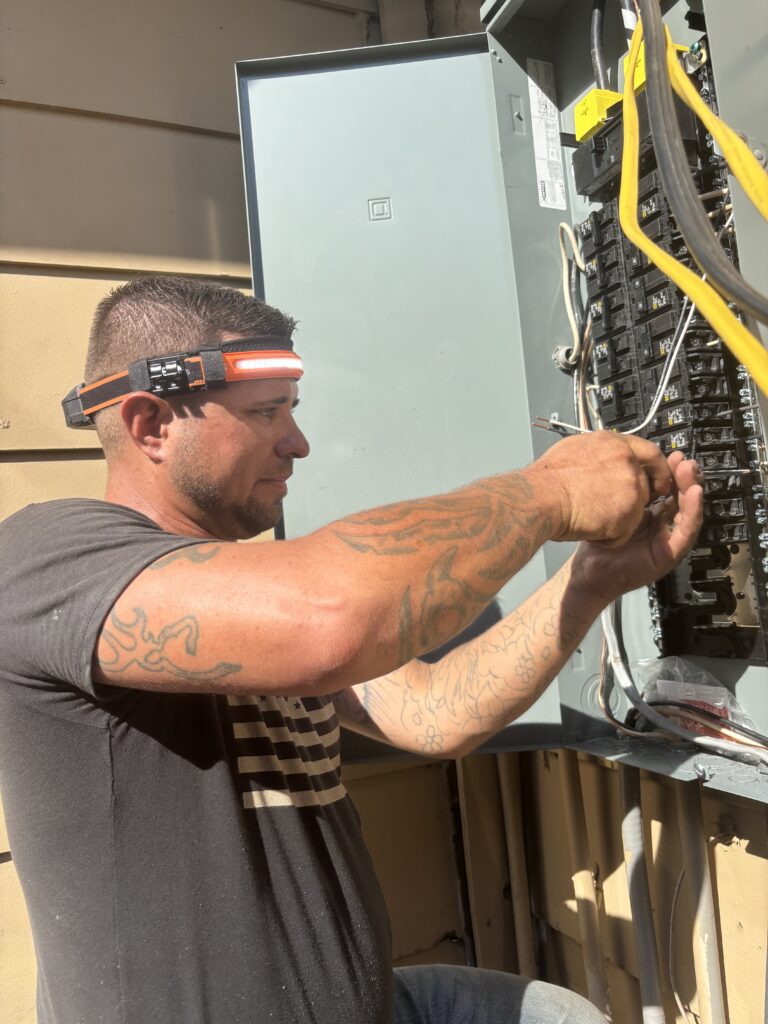
How a Licensed Electrician Repairs Flickering Lights Properly
Repair work begins only after the cause has been confirmed, not before. Loose connections get tightened to manufacturer torque specifications, and damaged wires are replaced rather than reused. Burned terminals on breakers mean the breaker itself needs replacement because the contact surface is compromised. Aluminum wiring connections receive proper anti-oxidant compound and torque to prevent future loosening. Cutting corners on these repairs leads to repeat problems and ongoing safety risks.
Circuit redistribution involves moving certain loads to different breakers to balance the panel and reduce voltage sag. The electrician maps every circuit and decides which loads should share each leg of the service. This work requires planning because some circuits cannot be easily relocated without rewiring. When the balance is right, voltage stays steadier under heavy load and flickering disappears. A clear panel directory is created so future work goes faster.
When a panel upgrade is the answer, the electrician handles the permit, utility coordination, and installation from start to finish. New panels include modern arc fault and ground fault protection, which catches the kinds of faults that older panels miss. Service upgrades from 100 amps to 200 amps give the home capacity for current and future needs. Every connection in the new panel is torqued, labeled, and inspected before the cover goes back on. Risen Power Electric also offers a service upgrade for homes that need more capacity for modern living.
Why Choose Risen Power Electric for Flickering Lights and AC Electrical Issues
Risen Power Electric is led by a master electrician who is licensed and insured, with years of hands-on experience in residential electrical work. Every job, from a simple repair to a full panel upgrade, gets the same careful attention to safety and quality. Clear communication from start to finish is part of the standard, so you always know what is happening and why. Honest recommendations without upselling have earned us a strong reputation in Lone Oak and the surrounding communities.
Veteran discounts are available as a thank-you to those who have served, and our diagnostic fees are waived when we handle the repair. Our 24/7 emergency electrical service means you are not stuck waiting through a long, hot night when your AC trips a breaker or your lights start flashing. We focus on long-term safety and performance, not quick fixes that leave you calling back next month. Every recommendation is made with your home’s actual needs in mind, not a sales target.
Flickering lights during AC startup deserve a professional answer before they turn into a bigger problem. Call Risen Power Electric at (903) 413-7186 to schedule a diagnostic visit, and let an experienced electrician put your concerns to rest. We serve Lone Oak, Royse City, Terrell, Sulphur Springs, Forney, and many other communities across North Texas. Reliable power, honest service, and clear answers are what you get every time you call us.