
Why Halloween Decorations Are One of the Top Causes of Electrical Fires
Halloween brings out more plug in decorations than any other night of the year, and that surge of extra load lands on wiring that was never designed to carry it. Fire investigators see the same pattern every October: a single outdoor receptacle feeding a chain of light strings, an inflatable ghost, a fog machine, and a set of animatronics all at once. National fire data has long shown that decorations are the item first ignited in hundreds of home structure fires annually, and a large share of those fires trace back to electrical faults rather than open flame. The problem is rarely one bad product; it is the combination of aging extension cords, unprotected outdoor outlets, and circuits pushed past their rated capacity for six or seven hours a night. Homes around Lone Oak, Emory, and Quitman add another wrinkle, since older rural services and long outbuilding runs leave very little headroom for seasonal loads. Understanding how these fires start gives you a realistic path to preventing them, and most of that path costs far less than the damage a single overloaded circuit can cause.
How Halloween Decorations Cause Electrical Fires on Residential Circuits
Every Halloween display is an electrical load calculation, though almost nobody treats it that way. Decorations get plugged in wherever an outlet happens to be, cords get run across walkways and through mulch beds, and the whole display runs unattended after dark while the family is out trick or treating. Heat builds slowly inside connections that are loose, corroded, or undersized, and insulation degrades long before anyone smells anything. A branch circuit rated at 15 amps supports roughly 1,800 watts at full load, but continuous operation should stay near 1,440 watts to leave a safety margin. Most homeowners have no idea what their display actually draws, and they have no idea which other rooms share that same breaker. Once you understand the three failure points that cause the majority of these fires, the fix becomes obvious.
Overloaded Circuits Cause Most Halloween Decoration Electrical Fires
Overload is the single most common cause because holiday loads are additive and invisible. A 25 bulb string of C9 incandescent bulbs pulls somewhere between 125 and 175 watts depending on bulb wattage, and it takes only eight or nine of those strings to consume an entire 15 amp circuit before the inflatable blower ever spins up. Inflatable decorations run continuous duty motors that draw current all evening and spike briefly at startup, which stresses breakers and connections in a way that steady lighting loads do not. Add a fog machine with a heating element, a projector, an animatronic with a motor and a sound board, and a strand of pathway lights, and the total climbs past what the wiring was ever intended to support. The circuit may not trip immediately, which is exactly what makes it dangerous, because a conductor operating just under its trip threshold heats steadily inside walls and inside cord jackets. That heat cooks insulation, hardens it, and eventually allows conductors to touch.
The situation gets worse when the outdoor receptacle shares a circuit with interior loads that nobody thought about. Many homes in this part of Texas were wired with garage outlets, exterior receptacles, and sometimes a bathroom or laundry outlet on the same branch circuit. A garage freezer cycling on while the display runs can be the difference between a warm breaker and a failed one. Homeowners then reach for the wrong solution and plug a multi outlet strip into an extension cord, which does not add capacity; it only adds connection points where heat can develop. Cheap power strips sold for indoor use are especially poor choices outdoors, since their internal contacts are thin and their molded housings trap moisture. Every additional plug and socket in the chain is another spot with contact resistance, and resistance under load produces heat.
Manufacturer connection limits exist for exactly this reason, and they are printed on the tag attached near the plug of every listed light string. Incandescent sets typically allow only three strings connected end to end, while LED sets often allow twenty or more because their current draw is a small fraction of the older technology. Ignoring that tag pushes current through the first plug in the chain that was never rated to carry the entire series, and that first connector is where the melting starts. Switching a display to LED strings solves a large portion of the load problem outright, often cutting decoration wattage by eighty to ninety percent while producing the same visual effect. If your display has outgrown the outlets you have, adding dedicated exterior circuits is the correct fix rather than daisy chaining more cords. Planning a bigger display this year? Click here for our outdoor lighting installation service and get properly sized circuits before the load goes up.
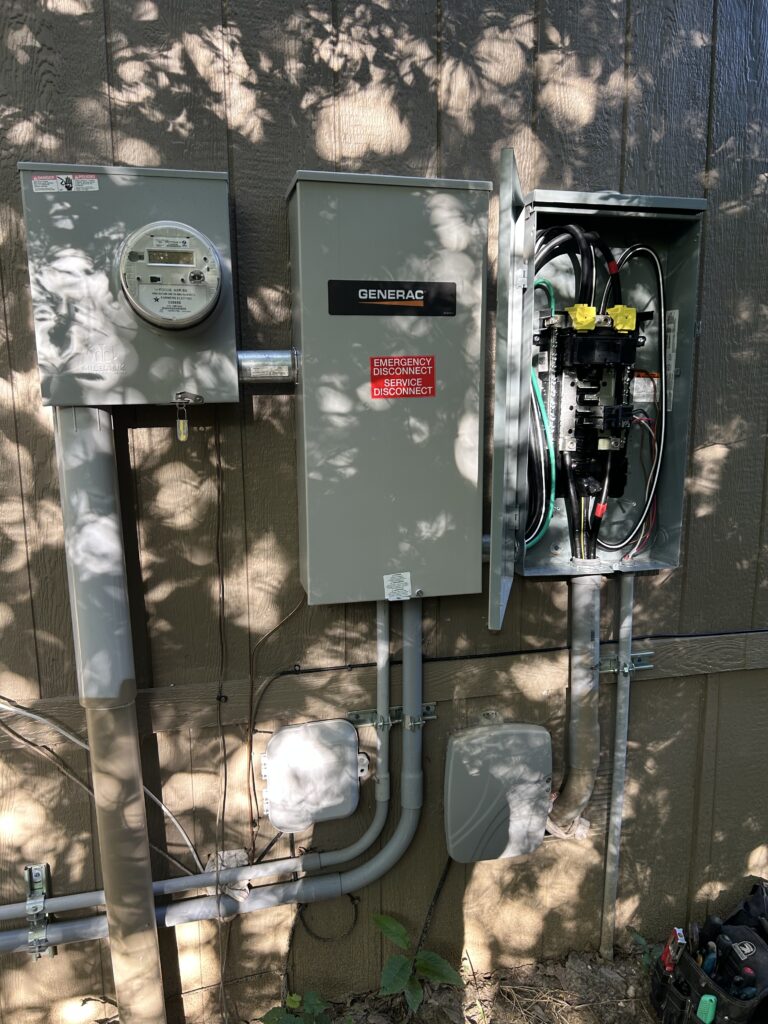
Damaged Extension Cords Cause Halloween Decoration Electrical Fires Every October
Extension cords take more abuse than any other component in a seasonal display, and most of that abuse happens where nobody looks. Cords get pulled taut around fence corners, pinched under garage doors, stapled to trim, driven over in driveways, and buried under mulch and leaves. Each of those stresses works on the outer jacket until the insulation surrounding the individual conductors is compromised, and a nicked conductor arcs against its neighbor or against a grounded surface. Arcing produces temperatures well above the ignition point of dry leaves, straw bales, cotton cobwebs, and the fabric props that surround most displays. Storage habits compound the damage, because cords that spent eleven months coiled in a hot Texas attic come out brittle, cracked, and stiff. Heat and ultraviolet exposure break down PVC and rubber jackets over time, and a cord that looked fine last season may not be fine now.
Gauge matters just as much as condition, and it is the detail most homeowners skip entirely. A thin 16 gauge cord is acceptable for a small lamp at a short distance, but it is not acceptable for a hundred foot run feeding several hundred watts of decorations. Voltage drop increases with length and with load, and the energy lost along that run turns into heat inside the cord itself. Runs beyond fifty feet generally call for 14 gauge conductors, and heavier displays or longer runs call for 12 gauge. Outdoor cords must be listed for outdoor use, marked with designations such as SJTW or with a W in the type code, and they should carry a three prong grounding plug that stays intact. Cutting off the ground pin to fit a two slot receptacle removes the fault path that protects you, and it is one of the most dangerous shortcuts in seasonal decorating.
Installation method causes as much damage as the cords themselves. Staples driven through a cord jacket, nails hooked over conductors, and cords wrapped tightly around metal railings all create pressure points that eventually break down insulation. Cords should be secured with insulated staples designed for the purpose, plastic clips, or fabric tape rather than metal fasteners driven through the jacket. Running cords through doorways and window channels crushes them each time the door closes, and running them under rugs or door mats traps heat that has nowhere to escape. Any cord that feels warm along its length is telling you it is undersized for the load it carries, and that is a warning worth acting on immediately. Replace damaged cords rather than repairing them with electrical tape, since tape hides damage without restoring the insulation rating.
Moisture and Outdoor Exposure Cause Halloween Decoration Electrical Fires and Shocks
Late October in North Texas brings heavy morning dew, sudden cold fronts, and rain that arrives with almost no warning, and every one of those conditions puts water where electricity should not be. Outdoor plug connections lying on wet grass or in mulch beds allow moisture to bridge the conductors, which creates leakage current and corrosion at the contact surfaces. Corroded contacts increase resistance, resistance increases heat, and the connection eventually fails in a way that can ignite nearby material. Sprinkler systems cause the same problem on a schedule, soaking connections in the early morning hours while the household sleeps. Water intrusion into a light string socket or an inflatable blower housing can also cause internal shorting that persists after the surface dries. The visible result is a decoration that stops working; the invisible result is a connection that has been degrading all week.
Code requirements exist to handle this, and most homes built before those requirements were adopted simply lack the protection. Outdoor receptacles at dwellings require ground fault circuit interrupter protection, which detects current leaking to ground and cuts power in a fraction of a second. Receptacles in damp and wet locations also require weather resistant devices and in use covers, the deeper bubble style covers that keep a plugged in cord shielded from rain. A flat flip lid cover does nothing once a cord is plugged in, since the lid cannot close over the plug body. Homes without GFCI protection on exterior outlets have no automatic response to a fault at all, and the fault continues until the breaker senses enough current to trip or until something ignites. That gap between a dangerous fault and a breaker trip is where most shock injuries and many fires occur.
Ground level connections deserve specific attention because that is where water collects. Plug connections should be elevated off the soil, sealed with a listed cord connection cover, and positioned so that water drips away from the joint rather than pooling at it. A simple drip loop, meaning a downward curve in the cord before it reaches the receptacle, keeps running water from traveling along the jacket and into the outlet. Decorations staked into flower beds should have their transformers and blower motors kept above the mulch line, since low voltage transformers still connect to line voltage on the primary side. Extension cord ends buried under leaves are impossible to inspect and easy to forget, and leaf litter is exactly the fuel a small arc needs. Take five minutes before Halloween night to walk the display and lift every connection off the ground.
Halloween Decoration Electrical Fire Warning Signs Every Homeowner Should Recognize
Electrical fires almost never happen without warning; they happen after warnings get ignored or misread as normal seasonal behavior. Homeowners tend to explain away tripped breakers and dimming lights as the price of a big display, when those symptoms are the system reporting a genuine problem. The window between the first symptom and an actual failure can be days or it can be hours, and there is no reliable way to tell which from the outside. Learning what each symptom means lets you shut down the right circuit before anything burns. Most of these signs are noticeable during a normal evening walk through the yard. Pay attention to what you feel and smell, not just what you see.
Repeated Breaker Trips Are a Halloween Decoration Electrical Fire Warning Sign
A breaker that trips when the display turns on is doing precisely the job it was installed to do, and resetting it repeatedly defeats that protection. Overload trips happen when total current exceeds the breaker rating for a sustained period, and they usually occur several minutes after everything powers up rather than instantly. Short circuit trips happen immediately and forcefully, and they point to a damaged cord, a faulty decoration, or water intrusion somewhere in the chain. Ground fault trips on a GFCI protected circuit indicate current leaking to ground, which is nearly always moisture or a compromised conductor. Each of those has a different cause and a different fix, and none of them are solved by pushing the handle back on. A breaker that has tripped many times over its life also weakens internally and may fail to trip when it matters most.
Some homeowners respond by moving decorations to a different outlet, which sometimes works and sometimes just moves the overload to a circuit with slightly more headroom. That approach hides the problem for another season while the underlying capacity shortage remains. Others replace a 15 amp breaker with a 20 amp breaker, which is genuinely dangerous, since the breaker protects the wire and not the appliance. Fifteen amp breakers are installed on 14 gauge conductors, and allowing 20 amps through 14 gauge wire lets the wire heat inside the wall with no protection whatsoever. That single modification has caused countless house fires and it is not something a homeowner should ever attempt. If a circuit cannot handle the load, the answer is a new circuit or a reduced load.
A breaker that feels warm to the touch, that buzzes, or that will not reset cleanly needs professional attention rather than another attempt. Loose connections inside a panel generate heat at the bus stab, and that heat can damage both the breaker and the panel bus itself. Aluminum branch wiring in older homes expands and contracts at connection points and needs specific hardware and treatment to remain safe. Panels from certain manufacturers have documented histories of breakers failing to trip under fault conditions, and holiday loading is a poor time to discover that. Persistent trips during the season are a strong sign that your service or panel capacity no longer matches the way you use the home. Tripping breakers this fall? Click here for our circuit breaker repair service and get the actual cause identified.

Warm Outlets and Discolored Plugs Are a Halloween Decoration Electrical Fire Warning Sign
Receptacles should stay at room temperature no matter what is plugged into them, so any noticeable warmth at the faceplate means heat is being generated inside the device or at its terminations. That heat almost always comes from a loose connection, either at the screw terminals inside the box or at the contacts gripping the plug blades. Contacts inside older receptacles lose spring tension over decades of use, and a loose grip on a plug blade creates a small gap where current arcs continuously. Backstabbed connections, where the wire is pushed into a hole on the back of the device rather than wrapped under a screw, are especially prone to loosening over time. Once a connection starts arcing it degrades faster, and the plastic around it chars and eventually reaches ignition temperature. A warm faceplate on a receptacle carrying decoration load should end the evening for that circuit.
Discoloration is the visible record of that process, and it means the problem has already been developing for a while. Brown or black staining around the slots of a receptacle, melted spots on a plug body, or a plug that is difficult to remove all indicate heat damage. Cord plugs that come out of the wall warm after a few hours of use tell the same story from the other direction. A burning smell near an outlet is a genuine emergency; that odor comes from overheated insulation and plastic, and it precedes visible flame by a very short margin. If you smell it, kill the circuit at the breaker, unplug what you can safely reach, and call an electrician rather than waiting to see what happens. Do not simply move the load to another outlet and continue the evening.
Repeated heating also damages the branch wiring behind the box, which is why the fix is often more than swapping a device. Conductors that have been overheated near their terminations may have brittle insulation for several inches back into the box, and simply installing a new receptacle on damaged wire ends recreates the same problem. A proper repair trims back to sound conductor, verifies box fill and connection method, and confirms that the circuit is not chronically overloaded to begin with. Homes with many decorative loads benefit from dedicated exterior circuits so that the seasonal draw never touches interior wiring at all. Tamper resistant and weather resistant devices should replace anything installed decades ago at exterior locations. Correcting one hot outlet without checking the rest of the circuit leaves the same conditions in place elsewhere.
Dimming and Flickering Lights Are a Halloween Decoration Electrical Fire Warning Sign
Lights that dim when a decoration blower kicks on show voltage dropping under load, and while a brief dip on motor startup can be normal, a sustained dimming pattern is not. Persistent voltage drop points to undersized conductors, long cord runs, loose connections, or a service that is simply carrying more than it comfortably can. That lost voltage does not disappear; it converts to heat at whatever connection or conductor is causing the resistance. Motors running on low voltage draw additional current to compensate, which heats the motor windings and shortens the life of inflatable blowers and animatronics. A display that dims the kitchen lights every time it cycles is describing a real capacity problem. That symptom deserves measurement rather than assumption.
Flickering that affects multiple circuits or the entire home usually indicates something upstream of the branch wiring. Loose neutral connections at the service, corroded lugs in the meter base, and failing service conductors all produce whole house flicker, and a compromised neutral can send damaging voltage to sensitive electronics. Storm damage, tree contact with the service drop, and rodent damage to attic wiring show up the same way. Those conditions require immediate professional evaluation because they can escalate quickly and because they are outside the reach of any homeowner repair. Flicker that follows a specific decoration or cord is more localized and usually points to a damaged conductor or a failing connection in that chain. Isolating which lights flicker and when narrows the search considerably.
Older homes across Hunt, Rains, and Rockwall counties often still run on 100 amp services or on panels loaded well beyond their original design. Central air, electric water heating, well pumps, shop equipment, and modern kitchen appliances already consume most of that capacity before a single decoration goes up. Adding a large seasonal display to that situation is what turns an already tight service into a chronically overheated one. A load calculation tells you exactly where you stand and what a service upgrade would provide. Many homeowners find that upgrading service capacity solves problems they had accepted as normal for years. Persistent flicker is worth diagnosing before the holiday season stacks decoration loads on top of heating loads.
Why You Need a Professional Electrical Inspection Before Halloween Decorations Go Up
The cheapest time to find an electrical problem is before you add load to it, and late September through early October is the right window for that work. A qualified electrician can measure actual circuit loading, test protective devices, verify grounding, and identify the exact receptacles that should and should not carry your display. That visit typically costs a small fraction of one insurance deductible, and it removes the guesswork entirely. It also sets you up for the rest of the season, since the same circuits carrying Halloween decorations usually carry Christmas lights six weeks later. Getting it right once covers both holidays and every holiday after that.
A Preseason Electrical Inspection Prevents Halloween Decoration Electrical Fires
An electrical inspection establishes what your home can actually support instead of what you hope it supports. We check panel condition, breaker function, connection torque, grounding and bonding, and the condition of exterior receptacles and covers. Circuits get mapped so you know exactly which breaker controls which outlet, which matters enormously when something goes wrong at nine o’clock on Halloween night. We also identify aluminum branch wiring, obsolete panel equipment, missing GFCI protection, and open grounds that leave you without fault protection. Getting current information about your system beats discovering its limits during a failure. Want a full picture of your home’s wiring? Click here for our electrical inspection service.
The report you receive translates directly into decorating decisions. Knowing that your front exterior receptacle shares a circuit with the garage freezer changes where the inflatable goes. Knowing that your porch outlet lacks GFCI protection tells you to fix that before running anything outdoors in wet weather. Knowing your panel has no available spaces tells you what a display expansion will really require. That information turns a guessing game into a plan, and it usually reveals fixes that are simpler and cheaper than expected.
Inspections also catch problems entirely unrelated to decorations, which is part of the value. Loose panel lugs, double tapped breakers, damaged attic runs, and improperly modified wiring from previous owners surface during a thorough evaluation. Those conditions do not care what season it is, and they represent risk every day of the year. Correcting them before the holidays means one visit resolves both the seasonal concern and the underlying issue. Homeowners who inspect regularly rarely face emergency repairs at the worst possible moment.
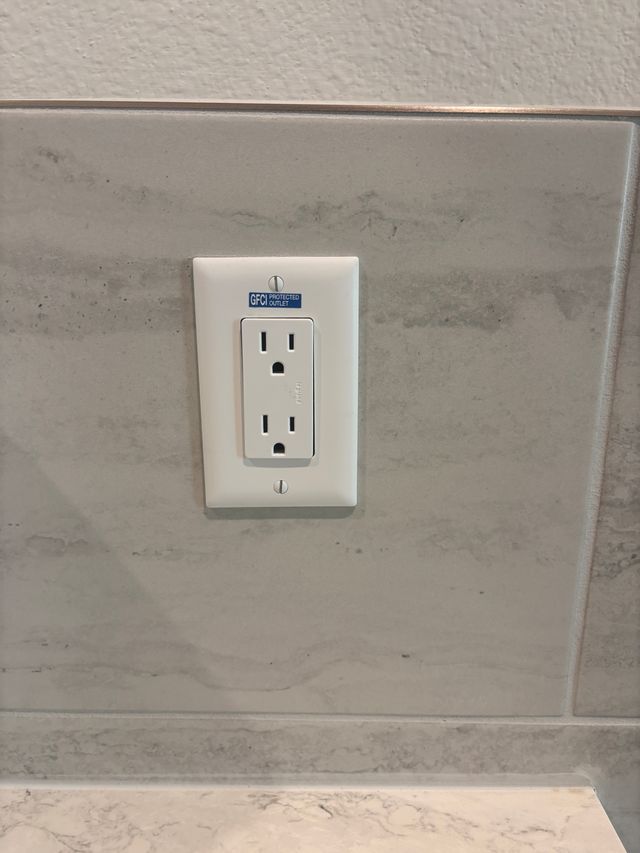
GFCI and Outdoor Outlet Upgrades Prevent Halloween Decoration Electrical Fires
Adding proper GFCI protection to exterior outlets is one of the highest value safety improvements available, and it is usually a same day job. Ground fault protection responds to current leaking through water, damaged insulation, or a person, and it interrupts the circuit in milliseconds. That protection matters most in exactly the conditions Halloween creates: wet grass, damp mulch, temporary cords, and children walking through the display. Weather resistant receptacles paired with in use bubble covers keep water out of the device while cords remain plugged in. Need protection before the decorations go up? Click here for our GFCI outlet installation service.
Dedicated exterior circuits solve the capacity problem that extension cords only disguise. A properly sized circuit run to the front of the house, controlled by a switch or timer, eliminates the hundred foot cord snaking out of the garage entirely. That single change removes trip hazards, removes the most damage prone component in the display, and gives you capacity that lasts for years. Adding receptacles at the eaves for light strings makes annual installation faster and safer as well. Most homeowners who add exterior circuits wonder why they waited.
Timers and photocell controls also reduce risk by limiting how long decorations run unattended. Displays left energized overnight or while the family is away have the longest exposure to developing faults with nobody present to notice. Automatic controls turn the display off at a set hour without anyone remembering to do it. Combining GFCI protection, in use covers, dedicated circuits, and timers addresses nearly every failure mode discussed here. Those upgrades stay useful long after the pumpkins come down.
Why Choose Risen Power Electric for Halloween Decoration Electrical Safety
Risen Power Electric is master electrician licensed and insured, and every job we take reflects that standard. We give clear communication from start to finish, so you understand what we found, what it means, and what your options actually cost. We make honest recommendations without upselling, which means we will tell you plainly when your existing wiring is fine for the display you have planned. Our focus stays on long term safety and performance rather than the quickest possible fix. Veteran discounts are available, and we waive diagnostic fees when we handle the repair.
We serve Lone Oak, Emory, Point, Quitman, Commerce, Caddo Mills, Royse City, Terrell, Forney, Canton, Wolfe City, West Tawakoni, Mineola, and Sulphur Springs. Our team works on everything from single receptacle replacements to full panel and service upgrades, and we treat seasonal safety work with the same care as major installations. Homeowners with older rural services get particular attention, since those systems face the tightest capacity constraints. We size circuits correctly the first time so you are not revisiting the same problem next October. Getting the work done in early fall means it is finished before decorations and heating loads arrive together.
We also offer 24/7 emergency electrical services, which matters on a holiday evening when a breaker will not hold or an outlet starts smelling hot. Electrical problems do not schedule themselves around business hours, and neither do we. Call us before Halloween to get your exterior circuits inspected, your GFCI protection verified, and your display planned around what your home can genuinely handle, or call us during the season if something goes wrong. Reach Risen Power Electric at (903) 413-7186 or email keith@risenpowerelectric.com to schedule service, and let us make sure the only frightening thing at your house this Halloween is the decorations.