
The Real Reason Your Garage Outlets Trip Every Time You Plug In a Power Tool
Garage outlets that trip the moment you plug in a power tool can stop a project before it even starts. Most homeowners assume the outlet is broken, but the real issue usually lives deeper in the circuit. Power tools draw heavy current, and older garage wiring was rarely built to handle modern saws, compressors, and grinders. As spring cleaning and summer DIY projects ramp up across Lone Oak and the surrounding areas, this problem shows up more often. Understanding why your outlets trip helps you fix the root cause instead of resetting the breaker over and over. Risen Power Electric sees this issue across homes of every age, and the fix is almost always simpler than people expect.
Why Garage Outlets Trip When You Plug In a Power Tool
Garage outlets trip because of three main reasons: overloaded circuits, a sensitive GFCI outlet doing its job, or damaged wiring behind the wall. Power tools pull a sudden surge of current at startup, sometimes two or three times their running load. If the circuit is shared with lights, a freezer, or another outlet, the total draw can exceed what the breaker allows. A tripping outlet is a warning, not a nuisance. Knowing which of these causes is at play helps you decide on the right repair path.
The Overloaded Circuit Behind Tripping Garage Outlets
Most older garages run on a single 15-amp or 20-amp circuit that powers every outlet, the overhead light, and sometimes a garage door opener. When you plug in a circular saw or a shop vac, the tool can spike well above the circuit’s rated capacity. The breaker senses the overload and shuts off power to protect the wiring from overheating. This is the breaker working exactly as designed, even though it feels like a problem. Plugging in a second tool on the same circuit, like a fan or a battery charger, almost guarantees a trip.
Shared circuits are common in garages built before the early 2000s, when electrical codes did not require dedicated power tool circuits. A refrigerator, a freezer, or even a string of LED shop lights can add a steady background load that leaves little room for a heavy tool. You may not notice the issue until summer, when the freezer runs more often and the air compressor gets pulled out for outdoor projects. Heat also raises the resistance in the wiring, which can make borderline circuits trip more easily. The fix usually involves adding a dedicated 20-amp circuit for power tools.
A licensed electrician can map out your existing circuits and identify which outlets share a line. From there, they can recommend either a new dedicated circuit or a subpanel if you plan to add more tools later. Upgrading the wiring now prevents future damage to your tools and protects the breaker from premature wear. A properly sized circuit also runs cooler, which extends the life of every component in the system. Need a dedicated circuit for your garage tools? Click here for our garage wiring service.
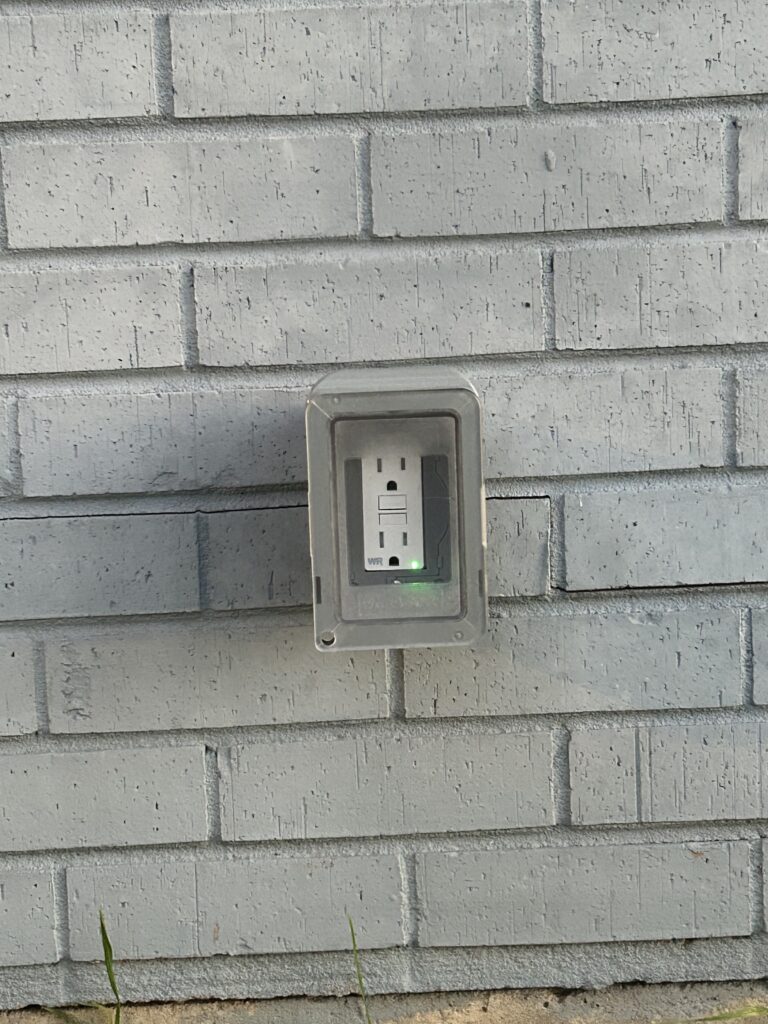
A Sensitive GFCI Outlet and Your Tripping Garage Outlets
Every garage outlet installed under modern code must be GFCI protected. A GFCI, or ground fault circuit interrupter, watches for tiny imbalances in current and shuts off power within milliseconds. Power tools with brushed motors, like older drills and grinders, naturally create small electrical leaks that can trick a GFCI into tripping. Worn brushes, damp cords, or a slightly cracked tool housing make this much worse. The outlet is not broken; it is doing exactly what it was built to do.
Moisture is another major trigger for GFCI trips in a garage setting. Humidity in spring, condensation on cold mornings, and water tracked in from the driveway all raise the risk of a ground fault. An outlet near a garage door, a slop sink, or an outdoor wall is especially vulnerable. Even a slightly damaged extension cord can introduce enough leakage to trip the GFCI the moment a tool kicks on. Inspecting your cords and tools before assuming the outlet is at fault saves a lot of frustration.
Sometimes the GFCI outlet itself is the issue. These devices typically last 10 to 15 years before their internal sensing circuit becomes overly sensitive or fails open. A failing GFCI may trip at random, refuse to reset, or feel warm to the touch. Replacing an old GFCI with a new code-compliant unit is a quick job for a licensed electrician and often solves the tripping problem completely. Want a fresh GFCI installed in your garage? Click here for our GFCI outlet installation service.
Damaged Wiring as the Cause of Tripping Garage Outlets
Hidden wiring damage is the most serious reason garage outlets trip when a power tool plugs in. Rodents, nails from old shelving, and decades of heat cycling can wear through insulation inside the wall. When a tool draws a large current, the weak spot heats up and either creates a short or pulls enough leakage current to trip the breaker. This kind of fault often gets worse over time and can become a fire hazard if ignored. A breaker that trips repeatedly under the same load is a strong signal to investigate the wiring.
Loose connections at the outlet, the breaker, or any junction box along the circuit can also cause repeated trips. Vibration from a slamming garage door, repeated plug-ins, and seasonal temperature swings all loosen wire terminals over time. A loose connection creates heat, and heat creates arcing, which an arc-fault or ground-fault device will catch quickly. You may notice flickering lights, a faint burning smell, or discoloration around the outlet plate. These signs call for immediate professional attention.
Aluminum wiring, knob-and-tube remnants, and back-stabbed outlets are common in older homes around Lone Oak, Sulphur Springs, and Terrell. Each of these wiring styles has known failure points that show up exactly when you need reliable power for tools. A full electrical inspection identifies these weak spots before they cause damage. Repairing or replacing the affected sections restores safe, steady power to your garage. Click here for our electrical inspection service if you suspect hidden damage.
How to Stop Garage Outlets From Tripping When You Use Power Tools
Stopping the tripping starts with matching the circuit to the tool. Power tools have wildly different startup loads, and the outlet you use needs to handle that surge without complaint. A few targeted upgrades can turn a frustrating garage into a reliable workshop. The right combination of dedicated circuits, proper GFCI protection, and clean wiring eliminates almost every common tripping issue. Here is how each solution works in real terms.
Adding Dedicated Circuits to Stop Garage Outlets From Tripping
A dedicated circuit serves one outlet or one specific tool, with no other devices sharing the load. This gives a table saw, an air compressor, or a welder the full amperage rating of the breaker without competition from lights or appliances. For most power tools, a 20-amp 120-volt dedicated circuit is plenty. Larger tools like a 5-horsepower compressor or a plasma cutter may need a 240-volt circuit, which doubles the available power while cutting the current draw in half. Lower current means less heat and far fewer nuisance trips.
Running a dedicated circuit involves pulling new wire from the main panel to a new outlet in the garage. The electrician sizes the wire based on the breaker amperage and the distance from the panel, since longer runs need thicker wire to prevent voltage drop. Voltage drop is a hidden cause of motor strain and breaker trips, especially in detached garages. Proper sizing keeps the tool running at its rated voltage and protects the motor windings from premature failure. A licensed electrician handles the load calculation, the conduit, and the breaker installation.
Many homeowners add two or three dedicated circuits during the same visit, which costs less per circuit than separate trips. You can plan one for the air compressor, one for the table saw, and one for general bench tools. This setup keeps every tool ready to run without juggling extension cords or waiting for a breaker to cool down. It also adds real value to your home when buyers see a properly wired workshop. Need new circuits in your garage? Click here for our home addition wiring service.

Upgrading Your Panel to Stop Garage Outlets From Tripping
Sometimes the breaker panel itself is the limiting factor. Older 100-amp panels in homes built in the 1970s and 1980s often have no room for new circuits and may already be running near capacity. Adding a high-draw tool circuit to a maxed-out panel can cause main breaker trips, panel heating, and code violations. A panel upgrade to 200 amps gives you the headroom for new garage circuits, future EV chargers, and any other major additions. It also brings the panel up to current safety standards.
Service upgrades involve coordination with the utility company, a permit, and a careful load calculation by a licensed electrician. The new panel includes modern features like arc-fault and ground-fault protection on every circuit, which catches problems that older panels miss. Bus bar quality, neutral bar capacity, and breaker compatibility all improve with a new panel. The result is a system that handles modern loads safely and quietly. Tripping issues caused by an undersized or aging panel disappear once the upgrade is complete.
A subpanel is another option when you want more circuits in the garage without replacing the main panel. The subpanel sits on the garage wall, fed by a single heavy cable from the main panel, and provides several new breaker slots right where you need them. This shortens wire runs to your tools, reduces voltage drop, and keeps the work area organized. It is especially useful for detached garages or large workshops. Click here for our electrical service upgrade service to see if a panel upgrade fits your home.
Replacing Old Outlets and Wiring to Stop Garage Outlets From Tripping
Even with a perfect circuit and a healthy panel, a worn outlet can still cause trips. Outlet contacts lose tension over years of plugging and unplugging, which creates resistance and heat at the connection point. Heat raises the chance of a ground fault and accelerates wear on the GFCI sensing circuit. Replacing old outlets with new 20-amp tamper-resistant GFCI units gives you a fresh, tight connection and modern safety features. This is one of the lowest-cost upgrades with the biggest payoff for power tool users.
If the wiring behind the wall is aluminum, undersized, or showing signs of heat damage, replacement is the safer route. Modern copper wiring sized correctly for the breaker eliminates resistance issues and runs cooler under heavy loads. A licensed electrician can rewire a garage circuit in less time than most homeowners expect, often within a single visit. The new wiring meets current code, which protects your insurance coverage and your family. It also future-proofs the garage for whatever tools or equipment you bring in next.
Outdoor and detached garage circuits need extra care because of weather exposure and longer wire runs. Proper conduit, weather-resistant outlets, and correctly bonded grounds keep the system safe in rain, heat, and freezing temperatures. Skipping these details is a common cause of tripping outlets in older detached buildings. A thorough rewire addresses every weak point and restores reliable power. Click here for our electrical wiring service for a full evaluation.
Why You Need a Licensed Electrician to Fix Tripping Garage Outlets
Tripping outlets are a warning sign, and guessing at the cause can lead to fire, tool damage, or shock. A licensed electrician brings the testing equipment, code knowledge, and experience to find the real issue quickly. DIY repairs on garage circuits often miss hidden wiring damage or create new code violations that show up during a home sale. Professional repair protects your home, your tools, and your family. Risen Power Electric handles every step from diagnosis to final testing.
A Licensed Electrician Diagnoses Tripping Garage Outlets the Right Way
A proper diagnosis starts with a load test, a continuity check, and an inspection of every connection point on the circuit. Specialized meters measure voltage drop under load, which reveals problems that a basic outlet tester cannot find. The electrician also checks the breaker for signs of internal wear and confirms that the GFCI is responding correctly. This kind of testing pinpoints the exact cause instead of relying on guesswork. Honest recommendations come from accurate data.
Risen Power Electric never upsells repairs that the home does not need. The technician shows you the meter readings, explains what they mean, and gives you a clear repair plan. If the fix is a simple outlet replacement, that is what we recommend. If the issue is a deeper wiring problem, we explain why and what the safe solution looks like. Clear communication from start to finish is part of every visit.
Waived diagnostic fees apply when we perform the repair, which keeps the process fair and transparent. You pay for the fix, not for the investigation. This pricing model reflects our focus on long-term safety and performance rather than quick sales. Customers in Lone Oak, Terrell, Royse City, and the surrounding areas have come to expect this kind of straightforward service.

A Licensed Electrician Repairs Tripping Garage Outlets Safely
Safe repair means de-energizing the circuit, verifying with a meter, and following every relevant section of the National Electrical Code. Licensed electricians carry the training to handle live panels, properly torque connections, and select code-compliant materials. Each of these steps protects the home from arc faults and ground faults down the road. Insurance coverage often requires that electrical work be performed by a licensed professional. A receipt from a licensed electrician matters during claims and home sales.
Repairs in older homes around Lone Oak sometimes uncover surprises like deteriorated insulation, undersized neutrals, or improperly grounded outlets. A licensed electrician handles each issue as it appears and brings the work up to current code. This protects you from compounding problems that DIY shortcuts create. The repair is done once, and done correctly, which saves money over the long run.
Veteran discounts are available on every service call, which reflects our respect for those who have served. We extend the same care and quality to every customer in our service area. Combined with waived diagnostic fees and honest recommendations, the value of professional repair becomes clear. Our work stands behind every breaker, outlet, and wire we touch.
Why Choose Risen Power Electric for Tripping Garage Outlets
Risen Power Electric is a master electrician licensed and insured for every type of residential and commercial work. We focus on long-term safety and performance, which means we fix the root cause rather than the symptom. Each repair starts with a thorough diagnosis and ends with a tested, code-compliant result. Our team treats your home with the same care we would want in our own.
24/7 emergency electrical services are available for situations that cannot wait until morning. A breaker that will not reset, sparks from an outlet, or a burning smell in the garage needs immediate attention. We arrive ready to work, with the parts and tools to handle most repairs on the first visit. Clear communication keeps you informed every step of the way.
Honest recommendations without upselling are the foundation of our reputation across Lone Oak, Sulphur Springs, Forney, and the rest of our service area. Veteran discounts and waived diagnostic fees make professional service accessible. Call Risen Power Electric today at (903) 413-7186 to schedule a visit, and stop resetting that garage breaker for good.