
How to Prevent Overloaded Circuits When Hosting Thanksgiving Dinner
Thanksgiving puts more demand on a home electrical system than almost any other day of the year, and most homeowners never realize it until a breaker trips right as the turkey comes out of the oven. Roasters, warming trays, air fryers, slow cookers, coffee makers, and space heaters all pull heavy current at the same time, and many of them end up plugged into the same handful of kitchen outlets. A standard 20 amp kitchen circuit can safely deliver roughly 1,920 watts on a continuous basis, which sounds like plenty until you add a 1,500 watt roaster oven to a 1,200 watt griddle and discover you have already exceeded the limit. Overloaded circuits are not just an inconvenience; repeated overloading heats up conductors, degrades insulation over time, and wears out breakers until they either trip constantly or fail to trip when they should. The good news is that preventing an overload on Thanksgiving comes down to planning, and the planning takes far less time than the meal itself. Knowing which outlets share a circuit, how much your appliances actually draw, and where you have spare capacity will keep the lights on and the food hot. If your panel is older, undersized, or already showing signs of strain, the weeks before the holiday are the right time to address it rather than the morning of. Risen Power Electric works with homeowners across Hunt, Rains, and Kaufman counties who want their electrical system ready before the guests arrive.
Understanding Overloaded Circuits and What Causes Them on Thanksgiving
An overloaded circuit happens when the total current drawn by everything plugged into a single branch circuit exceeds what the wiring and breaker are rated to handle. In most homes built after the mid 1980s, kitchen countertop receptacles are served by at least two 20 amp small appliance branch circuits, and the National Electrical Code requires those circuits to serve the countertop area without sharing load with lighting or other rooms. Older homes often lack that separation entirely, which means a single 15 amp circuit might feed the kitchen counter, the dining room, and a hallway light all at once. Thanksgiving concentrates high wattage cooking appliances into a few hours in one room, and that concentration is exactly what pushes a circuit past its rating. The breaker does its job by tripping, and while that feels like a failure, it is actually the safety system working correctly. The real danger comes when homeowners bypass that protection with oversized breakers or daisy chained power strips. Understanding where your load is going is the first step toward spreading it out safely.
What Causes Overloaded Circuits in the Kitchen During Thanksgiving Cooking
The kitchen is where nearly every Thanksgiving overloaded circuit problem begins, and the reason is simple math. Countertop cooking appliances are resistive heating devices, which means they convert electricity directly into heat and draw close to their full nameplate rating the entire time they run. A typical electric roaster oven pulls between 1,400 and 1,650 watts, an air fryer runs 1,500 to 1,800 watts, a coffee maker draws around 900 to 1,200 watts during the brew cycle, and a countertop griddle can easily reach 1,500 watts. Add a stand mixer, a toaster oven, and a warming tray, and you are asking one or two circuits to carry a load that was never designed for simultaneous operation. The breaker responds by heating up internally until the bimetallic strip or magnetic element opens the circuit. Most homeowners then reset it, unplug one thing, and repeat the cycle until something more permanent gives out.
Compounding the problem is the fact that many kitchen outlets are wired in a shared configuration that homeowners cannot see from the outside. Two receptacles on opposite ends of the same countertop may sit on the same 20 amp circuit, so plugging the roaster into one and the griddle into the other does nothing to distribute the load. In homes with split wired receptacles, the top half of an outlet may be on one circuit while the bottom half is on another, which helps considerably but is not common in this part of Texas. The only reliable way to know how your kitchen is divided is to map the circuits ahead of time, and that takes about thirty minutes with a helper and a lamp. Once you know the layout, you can assign appliances to circuits instead of guessing. This mapping exercise pays off every year afterward, not just on Thanksgiving.
Refrigerators and dishwashers add another layer that people frequently overlook when planning the holiday cooking schedule. A refrigerator cycles on and off throughout the day, and while its running load is modest at around 700 watts, the compressor draws a substantially higher inrush current for the first fraction of a second when it starts. If a circuit is already sitting near its limit because of a roaster and a coffee maker, that motor start can be the event that trips the breaker. Dishwashers with heated dry cycles pull 1,200 to 1,500 watts and often run right in the middle of dinner service. Built in microwaves are supposed to have a dedicated circuit under current code, but in older homes they are frequently tied into the general kitchen circuits. Keeping motor loads and heating loads on separate circuits whenever possible eliminates most nuisance tripping. If your kitchen appliances share circuits they should not, an electrical service upgrade or the addition of dedicated circuits will solve the problem permanently.
How Overloaded Circuits Damage Wiring and Breakers Over Time
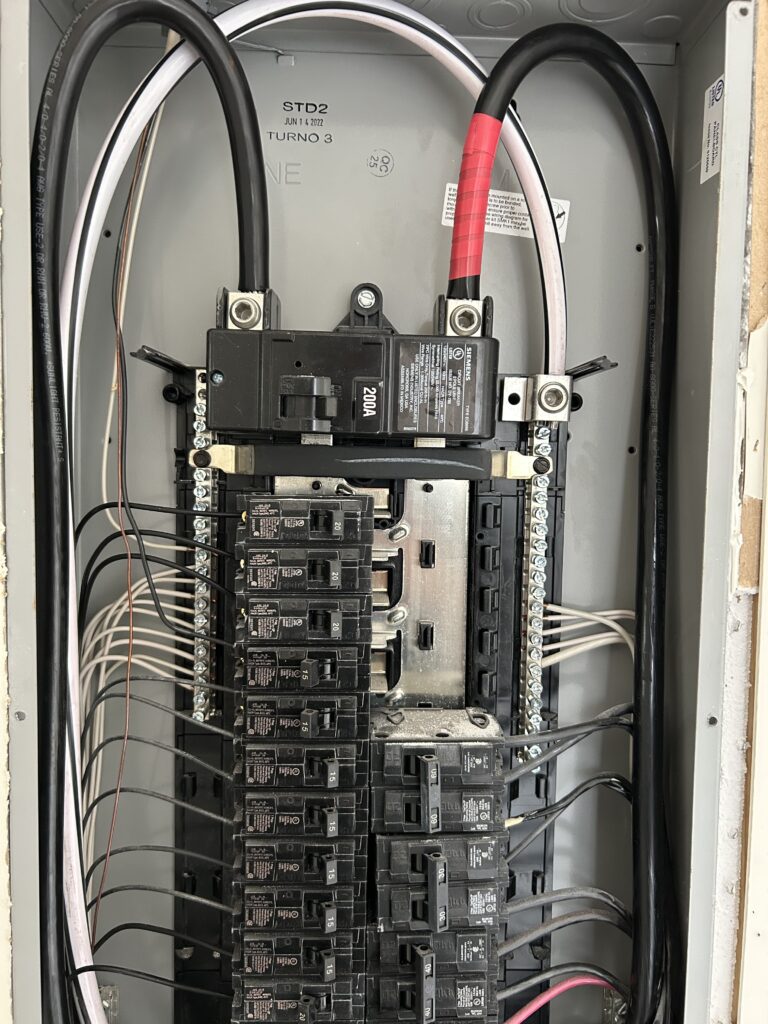
A breaker that trips once or twice is doing exactly what it was built to do, but a circuit that gets overloaded repeatedly suffers cumulative damage that does not reverse itself. Every time a conductor carries more current than its ampacity allows, it heats up, and that heat is absorbed by the insulation surrounding it. Modern THHN and NM cable insulation is rated for 90 degrees Celsius, but the terminations and the breaker itself are typically limited to 60 or 75 degrees Celsius, so the weakest link determines the safe operating point. Repeated heating cycles cause the insulation to become brittle, and brittle insulation eventually cracks at bends and junction points. Once insulation fails, you have the conditions for a short circuit or ground fault inside a wall cavity where nobody can see it. This is the mechanism behind a large share of residential electrical fires each year.
Circuit breakers themselves have a finite service life that shortens dramatically with repeated tripping. A thermal magnetic breaker uses a bimetallic strip that bends as it heats, and every trip cycle causes a small amount of mechanical fatigue and contact erosion. After enough cycles, the breaker may begin tripping at loads well below its rating, or in a worse scenario, it may weld its contacts and fail to trip at all. Breakers older than thirty years, especially certain legacy panel brands with known reliability problems, deserve professional evaluation regardless of how they appear to be performing. A breaker that feels warm to the touch at the panel face, or that has a loose feel when you toggle it, is telling you something. Risen Power Electric performs circuit breaker repair and replacement to restore proper protection.
Connection points suffer just as much as the conductors and breakers do, and they are often where the real trouble starts. Every outlet, switch, splice, and terminal screw represents a place where current has to move across a mechanical joint, and heat causes those joints to expand and contract. Over years of thermal cycling, a screw terminal loosens slightly, resistance at that joint increases, and the increased resistance generates even more heat in a feedback loop that ends in arcing. Backstabbed receptacles, where the wire is pushed into a spring clip on the back of the device rather than wrapped around a screw, are especially prone to this failure. Outlets that feel warm, show discoloration around the slots, or hold plugs loosely have already begun the process. Replacing worn devices and tightening terminations during an electrical inspection stops the cycle before it becomes dangerous.
Why Extension Cords and Power Strips Make Overloaded Circuits Worse
The instinct when you run out of outlets is to reach for a power strip, but a power strip does not add capacity to a circuit; it only adds places to plug things in. The circuit behind that strip still has the same 15 or 20 amp limit it always had, and now you have concentrated even more load through a single receptacle and a single cord. Most consumer power strips use 14 or 16 gauge cord and are rated at 15 amps, which means a roaster and a griddle together will exceed the strip’s rating before the branch breaker even notices. Quality strips include their own overcurrent protection that trips first, but cheap ones simply heat up. The cord itself becomes the weak point, and cords are usually run under rugs or behind furniture where heat cannot dissipate. This is a genuinely common source of holiday fires.
Extension cords carry their own set of limitations that get ignored during busy cooking days. A 16 gauge cord is generally rated for 13 amps at short lengths, and that rating drops as the cord gets longer because voltage drop and resistive heating both increase with distance. Running a 1,500 watt roaster on a 25 foot 16 gauge cord means the appliance sees lower voltage, works harder, and draws slightly more current to compensate. For any high wattage cooking appliance, a 12 gauge cord is the minimum, and shorter is always better. Cords should never be coiled while under load, since a coiled cord traps heat in the center of the loop. Never run a cord under a rug, through a doorway, or across a walkway where it will be stepped on or pinched.
Daisy chaining, meaning plugging one power strip into another, is prohibited by the National Electrical Code and by nearly every manufacturer’s instructions for good reason. It defeats the protection scheme, obscures how much load is actually connected, and creates multiple points of connection resistance in series. The same applies to plugging a power strip into an extension cord or using a cube tap to double an outlet’s capacity. If you consistently need more outlets in your kitchen or dining area, the correct solution is to have additional receptacles installed on new circuits. Adding capacity is straightforward work when a panel has space, and it eliminates the annual scramble for outlets. Risen Power Electric can add dedicated circuits during a home addition wiring project or as a standalone job.
How to Prevent Overloaded Circuits Before Thanksgiving Guests Arrive
Preventing an overloaded circuit is a planning problem more than an electrical problem, and the planning works best when you start a few weeks out. Begin by taking inventory of every appliance you intend to run on Thanksgiving day and writing down the wattage listed on each nameplate or in the manual. Convert wattage to amperage by dividing by 120, and remember that a circuit should not carry more than 80 percent of its rating for continuous loads, which means 12 amps on a 15 amp circuit and 16 amps on a 20 amp circuit. Next, map which outlets belong to which breaker so you know what capacity you actually have available. With those two pieces of information you can build a simple plan that assigns appliances to circuits and staggers the ones that cannot run together. Homes with adequate panel capacity may only need better distribution, while homes with older service may need real upgrades.
Mapping Your Circuits to Prevent Overloaded Circuits on Thanksgiving Day
Circuit mapping is a straightforward afternoon project that gives you information you will use for years. Start by making sure your panel directory is legible, then work through the house one breaker at a time with a plug in circuit tester or a simple lamp. Turn off a single breaker, walk the house, and note every outlet, light, and appliance that lost power. Write the results directly on a floor plan sketch rather than relying on memory, and pay special attention to the kitchen, dining room, and any nearby hallway or garage outlets that might share a circuit. Label the panel directory clearly as you go, using room names and specific descriptions rather than vague entries like “kitchen.” This single step prevents most Thanksgiving overload surprises.
Once the map is complete, calculate the available capacity on each circuit that serves your cooking and serving areas. If a 20 amp kitchen circuit feeds four countertop receptacles, you have roughly 1,920 watts of usable continuous capacity to distribute among everything plugged into those four outlets. Assign your highest draw appliance to that circuit and then see what is left over, keeping in mind that appliances with heating elements pull their full rating for as long as they run. It usually becomes clear very quickly that two heating appliances cannot share one circuit. Look for underutilized circuits elsewhere in the house, such as a dining room or living room circuit that only serves lamps, and plan to run a proper heavy gauge cord to those outlets if needed. Garage and laundry circuits are often good candidates because they are frequently dedicated and lightly loaded on a holiday.
Keep the finished map somewhere accessible, such as taped inside a cabinet door or photographed on your phone, so anyone helping in the kitchen can reference it. Share the plan with family members who will be cooking, since the person who plugs in a second roaster without checking is usually the one who trips the breaker. It also helps to know exactly which breaker corresponds to the kitchen so a trip can be reset quickly without hunting through the panel. If you discover during mapping that a single circuit feeds an unreasonable portion of your home, that is worth addressing with an electrician. Panels in older Lone Oak and Emory area homes sometimes carry loads that were reasonable in 1975 and are not reasonable now. Risen Power Electric can evaluate your existing circuit layout and recommend the right corrections.
Distributing Appliances to Prevent Overloaded Circuits During Holiday Cooking
With your map in hand, the goal becomes spreading high draw appliances across as many separate circuits as your home allows. Put the roaster oven on one circuit by itself, since at 1,500 watts it consumes most of a 20 amp circuit’s safe capacity on its own. Move the coffee maker to a different circuit entirely, ideally one in the dining room or another room, because coffee brewing tends to happen at the same time as final meal prep. Slow cookers are the friendliest appliance on the list at 200 to 300 watts, so several of them can share a circuit without concern. Air fryers, griddles, and toaster ovens all belong in the high draw category and should each get their own circuit or be scheduled at different times. Write the assignments down and tape the list to the refrigerator.
Timing is the second half of the strategy, and it costs nothing to implement. Sequencing your cooking so that the two highest draw appliances never run simultaneously eliminates most overload risk without any electrical work at all. Slow cookers and warming trays can hold food at safe temperature for extended periods, which lets you finish high wattage cooking earlier and stage the results. If you are using the main oven, remember that an electric range operates on its own 40 or 50 amp 240 volt circuit and does not affect the countertop circuits, though it does add to the total service load. Gas ranges still use electricity for igniters, controls, and convection fans, though the draw is minimal. Building thirty minutes of margin into the schedule gives you room to adjust if something does trip.
Space heaters deserve a specific warning because late November in Texas can bring a genuine cold snap, and a house full of guests often means someone brings out a portable heater. Nearly every portable electric heater draws 1,500 watts on its high setting, which is the same as a roaster oven, and they run continuously rather than cycling. Plugging a space heater into a circuit that is already carrying kitchen or dining loads is one of the most reliable ways to trip a breaker or overheat a cord. Space heaters should always plug directly into a wall outlet, never into an extension cord or power strip, and ideally into a circuit that carries nothing else. If your home struggles to stay comfortable without supplemental heat, that is a separate issue worth solving properly. Homes that need better electrical capacity for modern loads often benefit from an electrical panel installation with additional circuit space.
Upgrading Your Panel to Prevent Overloaded Circuits Year Round
Some homes simply do not have enough capacity to host a large gathering safely, and no amount of scheduling changes that fundamental limitation. A 100 amp service was standard for decades and works fine for a home with gas heat, gas water heating, and modest electrical demand. Add central air conditioning, an electric range, a heat pump, an EV charger, and a kitchen full of countertop appliances, and that same service becomes marginal. Signs that your service is undersized include lights dimming when large appliances start, breakers tripping under normal use, and a panel with no remaining spaces for new circuits. A load calculation performed according to Article 220 of the National Electrical Code will tell you exactly where you stand. That calculation is the correct basis for deciding whether to upgrade.
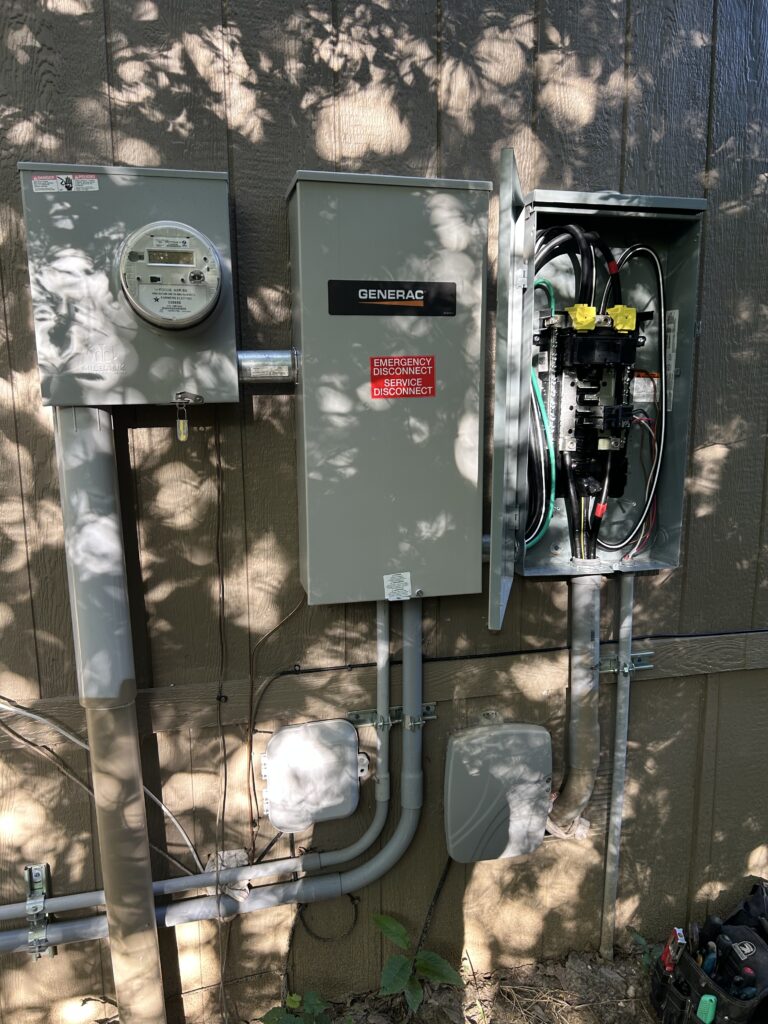
Upgrading from 100 amps to 200 amps involves replacing the service entrance conductors, the meter base, the main panel, and the grounding electrode system, and it requires coordination with the utility for a temporary disconnect. The work typically takes a full day and includes permitting and inspection through the local authority having jurisdiction. The benefit extends far beyond Thanksgiving; a modern 200 amp panel provides space for the dedicated circuits that current code requires and leaves room for future additions like generators, EV chargers, and pool equipment. Newer panels also accept arc fault and ground fault breakers that older equipment cannot support. Insurance carriers increasingly ask about panel age and brand, and some legacy panels have known defects that make replacement a safety priority rather than a convenience.
Even when a full service upgrade is not necessary, adding a subpanel or a few dedicated circuits can resolve kitchen capacity problems at a lower cost. A subpanel installed near the kitchen or in a garage gives you a convenient place to land new circuits without running long home runs back to the main panel. Dedicated 20 amp circuits for countertop appliances follow current code requirements and eliminate the sharing that causes holiday overloads. This kind of targeted work is often completed in a single visit with minimal disruption to finishes. Risen Power Electric handles electrical subpanel installation throughout the Lone Oak service area. Scheduling the work in October or early November means everything is finished and inspected well before the holiday.
Why You Need a Professional Electrical Inspection Before Thanksgiving
The weeks leading up to Thanksgiving are the right time to have a licensed electrician look at your system, because problems found in October are inexpensive compared to problems found on the holiday itself. An inspection identifies loose terminations, overloaded circuits, worn devices, missing GFCI protection, and panel issues before they cause a failure during your gathering. Kitchens and dining areas get the heaviest scrutiny since they carry the most load, but a thorough inspection covers the entire system including grounding, bonding, and the service equipment. Homeowners are often surprised by what an inspection reveals in homes that seemed to be working fine. A circuit can be operating right at its limit for years without any obvious symptom until one extra appliance pushes it over. Getting ahead of that is the entire point.
What a Pre Thanksgiving Electrical Inspection Covers in Your Kitchen
A kitchen focused inspection starts with verifying that countertop receptacles are served by the required small appliance branch circuits and that those circuits are not shared with lighting or other rooms. The electrician checks that all receptacles serving countertop surfaces have GFCI protection, which current code requires and which many older kitchens lack entirely. Each receptacle is tested for correct polarity, proper grounding, and adequate contact tension, since worn outlets that no longer grip plugs firmly create resistance and heat. Devices that show discoloration, warmth, or physical damage get flagged for replacement. The inspection also confirms that dedicated appliance circuits for the refrigerator, dishwasher, and disposal are actually dedicated.
Beyond the receptacles, the inspection covers junction boxes, splices, and any accessible wiring in the kitchen area. Loose wire nuts, boxes without covers, and undersized boxes crowded with conductors all show up regularly in homes that have had remodeling work done without permits. The electrician verifies that conductor sizes match breaker ratings, which catches the dangerous but common situation where someone replaced a tripping 15 amp breaker with a 20 amp breaker on 14 gauge wire. That specific mistake removes the protection the wiring depends on. Thermal imaging can reveal hot spots at terminations that are not visible during a standard inspection. Anything found gets documented with a clear explanation of what it means and what it will take to correct.
The inspection extends to the panel itself, where the electrician checks the main breaker rating, available circuit spaces, torque on terminations, and the condition of the bus bar. Panels that show corrosion, evidence of past overheating, or double tapped breakers need attention regardless of the season. The grounding electrode system gets verified, since a compromised ground defeats much of the protection built into modern wiring methods. Homeowners receive a written summary that prioritizes findings by safety significance rather than by cost. Need a full evaluation before the holidays? Click here for our electrical inspection service.
How GFCI Protection and Modern Devices Prevent Overloaded Circuits and Shocks
GFCI protection does not prevent overloads directly, but it addresses a different hazard that becomes more relevant in a busy holiday kitchen. A ground fault circuit interrupter monitors the current leaving on the hot conductor and returning on the neutral, and it opens the circuit within milliseconds when it detects an imbalance of about five milliamps. That imbalance means current is finding another path to ground, which in a kitchen frequently means through a person standing at a wet sink. Code has required GFCI protection for kitchen countertop receptacles since 1987 and has expanded the requirement steadily since then. Homes that predate those requirements often have no GFCI protection anywhere in the kitchen.
Arc fault circuit interrupters address a related but distinct problem that ties directly into overload damage. An AFCI breaker detects the specific electrical signature of arcing, which occurs at damaged conductors, loose terminations, and pinched cords. Since repeated overloading is one of the causes of the loose and degraded connections that arc, AFCI protection provides a second layer of defense in exactly the places where holiday overloading does its damage. Current code requires AFCI protection for most habitable room circuits including dining rooms. Older panels may need replacement to accept modern combination breakers, though some manufacturers offer retrofit options.
Upgrading devices is relatively inexpensive work with a meaningful safety return. Replacing worn receptacles with new tamper resistant, properly rated devices eliminates loose connections and improves plug retention throughout the house. Adding GFCI protection to kitchen, bathroom, garage, and outdoor circuits brings older homes closer to current safety standards without a full rewire. These upgrades pair naturally with a pre holiday inspection since the electrician is already testing every device. Want safer kitchen outlets before the holiday? Click here for our GFCI outlet installation service.
Why Choose Risen Power Electric for Preventing Overloaded Circuits
Risen Power Electric is master electrician licensed and insured, and every job we perform follows the National Electrical Code and local requirements rather than shortcuts that make a problem disappear temporarily. We believe in clear communication from start to finish, which means you will understand what we found, why it matters, and what your options are before any work begins. Our approach centers on honest recommendations without upselling; if your kitchen circuits only need better distribution rather than a panel replacement, that is exactly what we will tell you. We waive diagnostic fees when we handle the repair, so getting an answer does not cost you extra. Veteran discounts are available as our way of recognizing service.
We serve homeowners throughout Lone Oak, Emory, Point, Quitman, Commerce, Wolfe City, Caddo Mills, Royse City, Terrell, Forney, Canton, Mineola, Sulphur Springs, and West Tawakoni. Our focus is long term safety and performance rather than quick fixes that resurface next holiday season. Twenty four hour emergency electrical service is available, which matters on a day when a tripped circuit or a failed panel cannot wait until Monday morning. We arrive prepared, work cleanly, and leave your home better protected than we found it. Every repair and installation is documented so you know exactly what was done.
Getting your electrical system ready for Thanksgiving takes far less time than dealing with a failure in the middle of dinner service, and the window to schedule that work is right now. Whether you need a straightforward inspection, additional dedicated circuits for your kitchen, or a full service upgrade to support a modern household, we can handle it before your guests arrive. Having trouble with breakers that trip during heavy use? Click here for our circuit breaker repair service. Call Risen Power Electric at (903) 413-7186 or email keith@risenpowerelectric.com to schedule your pre holiday electrical inspection, and let us make sure your home is ready for everything Thanksgiving demands of it.