
What Causes That Burning Smell Coming From Your Electrical Outlet
A burning smell coming from an electrical outlet is never something to explain away as normal. That sharp odor of hot plastic almost always means a connection inside the box is overheating, and heat like that does not appear without a cause behind it. Texas homes run hard in late August, with air conditioners cycling nearly around the clock and every room pulling power at the same time. All of that demand pushes current through wiring and receptacles that may already be loose, worn, or undersized for the load they carry. The encouraging part is that an odor is an early warning rather than a final verdict, and acting on it now costs far less than repairing fire damage later. What follows explains what actually creates that smell, what to do the moment you notice it, and how to tell when the situation has crossed the line into an emergency.
What Causes a Burning Smell Coming From an Electrical Outlet
Almost every burning smell at a receptacle traces back to one simple physics problem: electricity meeting resistance and turning into heat. A solid connection carries current with very little heat buildup, but a loose or corroded connection acts like a bottleneck, and the energy that cannot pass through cleanly gets released as temperature. Once that heat reaches the plastic housing of the receptacle or the insulation on the conductors, it produces the acrid odor homeowners describe as burning fish, hot plastic, or scorched wiring. The three most common sources are loose wiring behind the outlet, circuits carrying more load than they were designed to handle, and a failing device or receptacle at the point of contact. Each one behaves a little differently, and each one gets worse with time rather than better.
Loose Wiring Behind the Outlet Causes a Burning Smell in Electrical Outlets
The wiring behind a receptacle terminates either on the side screws or in the push in openings on the back of the device, and both types of connections can loosen over the years. Copper conductors expand slightly as they warm under load and contract again as they cool, and that constant cycle gradually works a connection looser season after season. Push in connections, often called backstabbed connections, rely on a small spring clip holding tension against the conductor, and those clips fatigue faster than a screw terminal ever will. A slightly loose connection has more electrical resistance than a tight one, and higher resistance produces heat at exactly that point. That heat then accelerates the loosening, which raises resistance further, creating a cycle that feeds on itself. Homes in Lone Oak and the surrounding area that were wired decades ago frequently have dozens of these aging connections sitting quietly inside the walls. The smell you notice is usually the first outward sign that one of them has started to fail.
Once a connection loosens enough, current begins to jump the small gap instead of flowing straight through, and that jump is called arcing. Arcing generates extremely high localized temperatures, hot enough to discolor copper, melt the plastic body of the receptacle, and char the surrounding insulation. That is where the strong burning odor originates, because heated PVC insulation and thermoset plastics release a very distinctive smell as they break down. Look closely and you may spot brown or black staining around the slots of the receptacle, a slightly warped face, or a cover plate that has yellowed unevenly. Aluminum branch wiring, common in houses built between roughly 1965 and 1973, raises the risk considerably because aluminum expands more than copper and oxidizes into a poor conductor at the terminal. Those systems need approved repair methods such as COPALUM crimps or AlumiConn connectors rather than a simple device swap. An electrician can identify aluminum conductors within minutes of removing a cover plate.
A loose connection rarely announces itself with one dramatic event, which is exactly what makes it dangerous. You might notice a cover plate that feels warm to the touch, a lamp that flickers when someone walks across the room, or an outlet that works intermittently until a plug gets wiggled. Some homeowners report a faint buzzing or crackling sound coming from inside the wall near the box. Any one of those symptoms alongside a burning odor points toward a connection that is actively overheating right now. The repair itself is usually straightforward once a licensed electrician opens the box, tests the circuit, and replaces the damaged device and any compromised conductor. Waiting, on the other hand, allows the damage to spread into the branch wiring, which turns a small repair into a much larger one. Smell something burning at an outlet? Click here for our electrical repair service and get it evaluated properly.
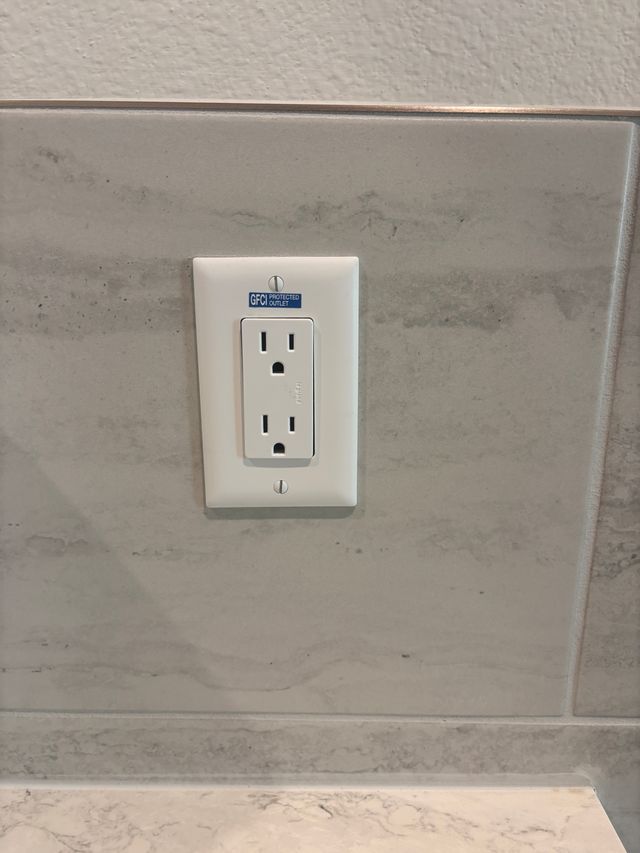
Overloaded Circuits Cause a Burning Smell From an Electrical Outlet
Every branch circuit in your home has a defined capacity, most often 15 amps on 14 gauge wire or 20 amps on 12 gauge wire. That rating reflects how much current the conductors can carry continuously without overheating, and the breaker in your panel exists to protect those conductors. Continuous loads, meaning anything running three hours or longer, should generally stay at or below 80 percent of the circuit rating. A 15 amp circuit therefore has roughly 1,440 watts of comfortable continuous capacity, which disappears quickly once you add a window air conditioner, a dehumidifier, and a television to the same run. When total draw creeps toward the limit, every connection along that circuit runs hotter than the designers intended. The receptacle nearest the heaviest load usually shows the effects first, since it carries the full current of that appliance through its internal contacts. That is why the burning smell so often appears at one specific outlet rather than throughout the room.
Late summer is peak season for this problem across Hunt, Rains, and Van Zandt counties. Portable air conditioners, window units, box fans, and dehumidifiers all draw significant current, and they run for hours at a stretch instead of cycling briefly. Many homeowners plug them into extension cords or power strips because the receptacle sits inconveniently far from the window. A light duty cord rated for a lamp simply cannot handle an air conditioner, and the cord itself becomes a heat source along its entire length. Daisy chaining one power strip into another compounds the problem by concentrating several loads through a single receptacle never designed for that duty. The plug blades themselves may discolor or partially melt, welding into the receptacle contacts. Any appliance with a motor or compressor belongs on its own dedicated receptacle, plugged directly into the wall.
People often assume a breaker will trip before anything gets hot enough to smell, but that assumption misses how breakers actually work. A breaker protects the wire in the wall from a sustained overcurrent or a short circuit, and it does not monitor the temperature of an individual receptacle. A circuit sitting at 90 percent of capacity for six straight hours will not trip anything, yet it can absolutely bake a marginal connection. Older breakers also lose calibration over decades of thermal cycling, and some legacy panel brands have documented failure histories that concern electricians greatly. If your breakers feel warm, trip inconsistently, or refuse to reset cleanly, the panel itself deserves attention alongside the outlet. Adding a dedicated circuit for a heavy appliance often solves the overheating permanently. Wondering if your breaker is part of the problem? Click here for our circuit breaker repair service to have it tested.
Failing Devices and Plugs Cause a Burning Smell at the Electrical Outlet
Sometimes the outlet is innocent and the item plugged into it is the actual source. Inexpensive phone chargers, laptop power supplies, and small appliance transformers contain capacitors and windings that degrade with age and heat. When one of those components fails internally, it can smell strongly of burning plastic or ozone even though the wall receptacle is perfectly sound. Motorized items such as fans, vacuums, and pumps produce a similar odor when their windings overheat or their bearings seize. The quickest diagnostic step is unplugging everything from the suspect receptacle and noticing if the smell fades over the next several minutes. If the odor lingers with nothing plugged in, the problem lives inside the wall and needs a professional. If the odor follows the device to another room, you have found your culprit and should stop using it entirely.
Receptacles themselves also wear out, which surprises many homeowners who assume they last forever. Inside each device are metal contacts that grip the blades of a plug, and those contacts rely on spring tension to hold firmly. Years of plugging and unplugging gradually relax that tension until a plug slides in loosely or droops out of the wall under its own weight. A loose grip means less contact surface area, more resistance, and more heat right at the face of the outlet. Standard grade receptacles found in most residential construction have thinner contacts than the specification grade devices used in commercial work. A receptacle that no longer holds a plug snugly should be replaced regardless of any odor, because it is already running hotter than it should. Replacement devices cost very little compared to the damage a failing one can cause.
Environmental conditions accelerate every one of these failure modes. Outdoor receptacles, garage outlets, and boxes on exterior walls face humidity, temperature swings, and occasional water intrusion that corrode terminals over time. Corrosion behaves exactly like a loose connection by adding resistance where you need clean conductivity. Insects and rodents sometimes nest inside boxes, leaving debris that traps heat or bridges terminals. Dust accumulation inside a receptacle slot does the same thing on a smaller scale. Ground fault protection is required in kitchens, bathrooms, garages, outdoor areas, and other damp locations for good reason, and many older homes still lack it entirely. Need protection in wet areas of your home? Click here for our GFCI outlet installation service to bring those locations up to current standards.
What to Do When You Smell a Burning Odor From an Electrical Outlet
Your response in the first few minutes matters more than almost anything else. The goal is simple: remove the load, remove the power, and keep everyone away from the area until a qualified electrician evaluates it. Most homeowners can safely complete the first steps without any tools, and none of them require opening a wall or removing a device. What you should not do is equally important, because a few common instincts make the situation considerably worse. Knowing the difference between a situation that can wait until morning and one that requires an immediate call is the final piece.
Shut Down Power Safely When an Electrical Outlet Smells Like Burning
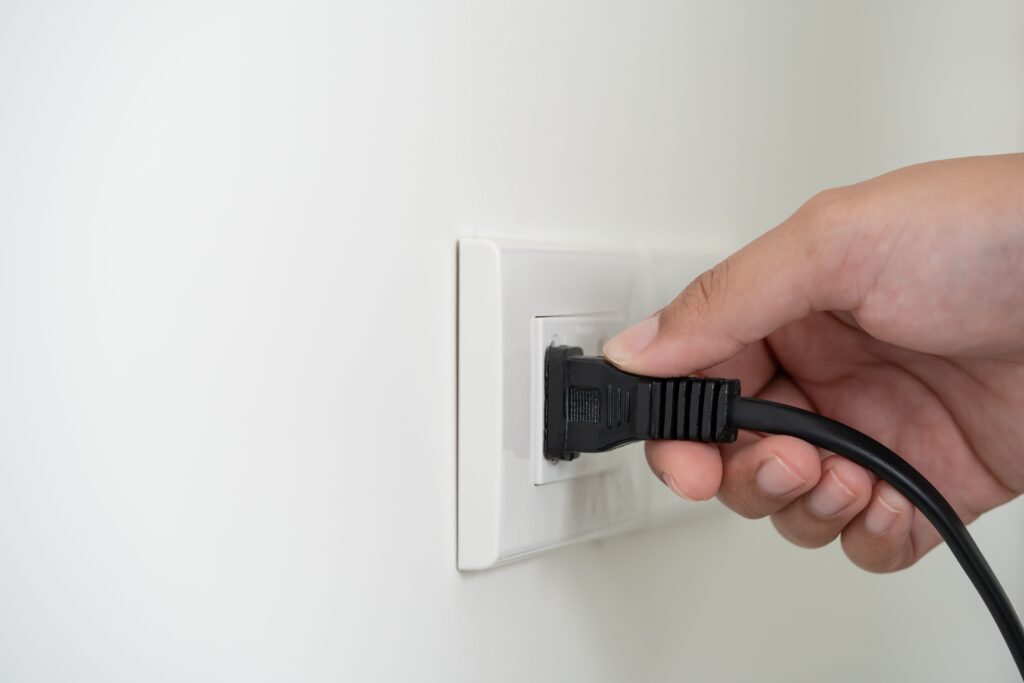
Start by unplugging everything connected to the receptacle, using the plug body rather than the cord and keeping your fingers clear of the blades. If the plug feels hot, the cover plate feels warm, or you see any discoloration, do not force it and do not handle it barehanded. Next, go to your electrical panel and identify the breaker serving that room or that specific circuit. Switch it fully to the off position rather than leaving it partially between positions, since a partial throw may leave the circuit energized. Test the outlet afterward with a lamp or a plug in tester to confirm the power is genuinely off, because circuits are not always labeled accurately. Some rooms share circuits in ways that surprise even experienced homeowners. Once you have confirmed the circuit is dead, leave it off until a licensed electrician has inspected the box.
Take a moment to check the outlets on either side of the affected one, along with any receptacles on the same wall. Heat damage often extends beyond the single device you noticed, particularly when the circuit was wired in a daisy chain from one box to the next. Feel each cover plate with the back of your hand and look for staining, warping, or a faint odor when you get close. Note anything you find so you can describe it accurately when you call for service. Check the panel too, holding your hand near the breakers to sense any unusual warmth and listening for buzzing. Write down which appliances were running when the smell first appeared, since that detail helps an electrician recreate the load conditions. Good information shortens diagnostic time considerably.
Ventilate the room by opening windows and running a fan pointed toward the outside, but avoid using any device plugged into the affected circuit. Burning plastic releases compounds that irritate the lungs and eyes, and there is no reason to breathe them longer than necessary. Verify that your smoke alarms are functioning before you settle back in, especially the ones nearest the affected room. Keep a fire extinguisher rated for electrical fires accessible if you have one, and confirm it is still charged. Do not restore power to test the outlet again, because a second energization can turn a smoldering connection into an active flame. Keep children and pets out of the room until the repair is complete. Patience here costs you nothing and protects everything.
What Not to Do When an Electrical Outlet Smells Like Burning
The single worst response is ignoring the smell and hoping it resolves on its own. Overheating connections do not heal, and every hour of continued use pushes the damage further into the wall cavity. Some homeowners cover the outlet with tape or a plastic child safety cap and consider the matter handled, but that hides the symptom while leaving the circuit energized. Others simply move their appliances to a nearby outlet, which frequently sits on the very same overloaded circuit. Rearranging plugs does nothing to address a loose terminal or an undersized branch circuit. The odor is information, and discarding that information removes your best early warning. Treat it the way you would treat the smell of gas.
Resist the urge to open the box and inspect the wiring yourself unless you are qualified and equipped to verify the circuit is deenergized. Backfed circuits, shared neutrals, and mislabeled panels create situations where a receptacle stays live even after you flip the breaker you expected. Multiwire branch circuits in particular can carry current on a neutral conductor that appears harmless. Removing a cover plate on a circuit you believe is dead has injured plenty of confident homeowners. There is also a diagnostic dimension, since a visual glance rarely reveals the actual failure point without proper testing. An electrician uses a meter and often a thermal camera to find heat sources you cannot see. Those tools turn guesswork into an accurate answer.
Avoid the temptation to simply swap in a new receptacle and call the job done. A replacement device installed onto damaged conductors will overheat again within weeks, because the underlying resistance problem never went away. Charred or annealed copper needs to be cut back to clean, sound wire before any new termination is made. If the box itself is scorched or the cable insulation has degraded, those components require replacement as well. Upsizing a breaker to stop nuisance tripping is even more dangerous, since it allows more current through wire that cannot safely carry it. That single shortcut has caused countless structure fires nationwide. Match the protection to the conductor, never the other way around.
When a Burning Electrical Outlet Smell Becomes an Emergency
Certain signs mean the situation cannot wait for a scheduled appointment. Visible smoke, sparks, flames, or a receptacle hot enough that you cannot comfortably touch the cover plate all demand immediate action. If you see fire of any size, leave the house and call 911 rather than attempting to fight it. A burning smell that grows stronger after you kill the breaker suggests the damage extends to conductors fed from elsewhere, which is a serious condition. Buzzing or crackling from inside the wall while the circuit is off points the same direction. Smoke alarms activating anywhere near the affected room deserve the same urgency. Trust your senses in these moments and do not talk yourself out of them.
Panel level warning signs raise the stakes considerably. A burning smell coming from the service panel itself, breakers that feel hot, a main breaker that trips repeatedly, or lights across the house that dim and brighten together can all indicate a failing service connection or a loose neutral. A loose neutral is especially destructive because it lets voltage swing above and below normal, damaging electronics throughout the home while overheating conductors at the same time. That condition frequently requires coordination with the utility as well as work on the service equipment. None of it belongs on a homeowner list of weekend projects. Voltage related damage tends to appear all at once across multiple devices. Fast diagnosis limits how much equipment gets ruined.
Homes with recurring symptoms deserve an urgent evaluation even without visible smoke. Repeated burning odors from different outlets, breakers that trip under normal summer load, or warm cover plates in several rooms suggest a systemic issue rather than one bad device. Aging aluminum wiring, an undersized service, and deteriorated panel busbars all produce that pattern. Waiting for the situation to escalate is a gamble with poor odds. Electrical fires are among the most preventable causes of residential structure loss, and early intervention works reliably. Need help right now, day or night? Click here for our emergency electrician service and we will respond around the clock.
Why You Need a Licensed Electrician for a Burning Outlet Smell
Diagnosing an overheating outlet correctly requires more than replacing a part and hoping the odor stays gone. A licensed electrician traces the circuit, measures voltage drop under load, checks terminations at every box on the run, and verifies that the breaker matches the conductor size. That process finds the root cause instead of treating the symptom you happened to notice first. It also uncovers related problems that would have surfaced later in the season, which saves you a second service call. Work performed by a master electrician follows current code requirements and holds up to inspection when you sell the house. Most importantly, it removes the fire risk permanently rather than postponing it.
A Professional Inspection Solves the Burning Outlet Smell for Good
An inspection begins with the receptacle you reported and expands outward along the circuit until every connection has been verified. Electricians check terminal tightness, look for signs of arcing, confirm conductor gauge, and examine the condition of the insulation at each box. Thermal imaging reveals hot spots behind cover plates and inside the panel without any disassembly at all. Testing under actual load conditions matters, since many faults hide completely when the circuit sits idle. The result is a clear picture of what failed and why it failed.
The inspection also evaluates the broader system feeding that circuit. Panel condition, breaker function, grounding and bonding, and total service capacity all influence how hot a given outlet runs. A home with a 100 amp service supporting central air, electric appliances, and a modern electronics load may simply be beyond its comfortable limits. Identifying that early lets you plan an upgrade on your schedule rather than during an outage. Documentation from the inspection gives you a straightforward record for insurance or resale purposes.
Regular inspections make sense even without an active problem, particularly for homes over thirty years old or recently purchased. Small issues found during a routine check cost a fraction of what emergency repairs run. Buyers and sellers both benefit from knowing the true condition of the electrical system before closing. Anyone planning a renovation, a pool, or a large appliance addition should verify capacity beforehand. Want a full picture of your home electrical system? Click here for our electrical inspection service and get real answers.

Repairs and Upgrades That Prevent a Burning Outlet Smell From Returning
The right repair depends entirely on what the inspection reveals. A single failed receptacle with sound wiring behind it gets a specification grade replacement and properly torqued screw terminations. Damaged conductors get cut back to clean copper, and scorched boxes get replaced outright. Circuits carrying more load than they were designed for get relief through a new dedicated circuit run from the panel. Each of these fixes addresses cause rather than appearance.
Larger issues call for larger solutions, and that is normal in homes built decades ago. Adding dedicated circuits for air conditioners, kitchen appliances, or a garage workshop spreads load across more conductors and lowers the temperature everywhere. Arc fault protection catches the exact sparking condition that creates burning smells, and it is now required in most living areas of new construction. Whole house surge protection shields sensitive electronics from utility side events and internal switching spikes. Upgrading an overloaded service panel resolves problems throughout the entire house at once.
Preventive work pays for itself over the years you stay in the home. Tight terminations, correctly sized conductors, modern protective devices, and adequate service capacity keep operating temperatures where they belong. Your appliances last longer, your lights stay steady, and your breakers stop nuisance tripping in August. Homeowners often notice a modest drop in energy waste as well, since resistance losses turn paid electricity into unwanted heat. Solid electrical work quietly protects everything else in the house.
Why Choose Risen Power Electric for a Burning Outlet Smell
Risen Power Electric is a master electrician licensed and insured company serving Lone Oak, Emory, Point, Quitman, Canton, Commerce, Caddo Mills, Royse City, Terrell, Forney, Sulphur Springs, Mineola, Wolfe City, and West Tawakoni. We treat a burning outlet smell as the safety issue it is, not as an opportunity to sell you things you do not need. Our approach starts with honest diagnosis and clear communication from start to finish, so you understand exactly what we found and what it will take to correct. We offer honest recommendations without upselling, and we waive the diagnostic fee if we handle the repair.
Emergencies do not respect business hours, which is why we provide 24/7 emergency electrical services throughout our service area. Overheating connections can escalate quickly, especially during peak summer load when air conditioning runs nearly nonstop. When you call, you get a real conversation about what you are seeing and smelling, followed by a prompt response. We arrive with the testing equipment needed to locate the actual fault instead of guessing. Veteran discounts are available as our way of saying thank you for your service.
Everything we do is focused on long term safety and performance rather than the fastest possible fix. That means proper terminations, correctly sized conductors, code compliant protection, and workmanship that still looks right years from now. Our reputation in Hunt County and the surrounding communities was built one careful repair at a time. If you smell something burning at an outlet, shut off the breaker and give us a call at (903) 413-7186 so we can make it safe again.