
Why Your Bathroom GFCI Outlet Keeps Tripping and What It Really Means
A bathroom GFCI outlet that trips once in a while is doing its job, but an outlet that trips every few days is telling you something specific about the circuit behind it. Late summer in Texas puts extra stress on bathroom circuits because humidity stays high, hair dryers run longer, and thunderstorms send voltage disturbances through the neighborhood grid. The GFCI device is not a circuit breaker, and it is not measuring how much power you are drawing; it is measuring how much current is leaking out of the circuit and finding another path to ground. When that leakage reaches roughly four to six milliamps, the device opens the circuit in a fraction of a second to protect you from a shock that could stop your heart. That sensitivity is exactly why it saves lives, and it is also why a small amount of moisture or a slowly failing wire can set it off repeatedly. Understanding the difference between a nuisance trip and a genuine ground fault helps you decide what to handle yourself and what needs a licensed electrician. This guide walks through the real causes, the safe troubleshooting steps, and the warning signs that mean the problem lives inside your walls rather than inside the outlet.
What Causes a Bathroom GFCI Outlet to Keep Tripping
Repeated tripping almost always traces back to one of three sources: moisture entering the circuit, a wiring fault somewhere along the run, or an appliance leaking current to ground. Bathrooms combine all three risk factors in a small space, which is why the National Electrical Code has required GFCI protection for bathroom receptacles since 1975 and has expanded that requirement steadily ever since. Your bathroom receptacles should also be fed by at least one dedicated 20 amp branch circuit, and in many homes that same circuit feeds a second bathroom, an outdoor receptacle, or a garage outlet. That daisy chained arrangement matters enormously during troubleshooting, because the outlet that trips is not always the outlet with the problem. A GFCI protects everything downstream of it, so a soaked exterior receptacle on the north side of the house can shut off the outlet next to your sink. Sorting out which device is the source and which is simply the messenger is the first real step toward a permanent fix.
Moisture and Humidity That Make a Bathroom GFCI Outlet Keep Tripping
Water conducts electricity, and it does not need to pool on the floor to cause a ground fault. Steam from a long shower condenses on cool metal surfaces inside an outlet box, and over time that condensation collects on terminal screws, the back of the device, and any exposed conductor strands. Once a conductive film bridges a hot terminal to the grounded metal box or to the equipment grounding conductor, current begins leaking along that path. The GFCI reads the imbalance between the hot and neutral conductors and opens instantly, which is precisely the behavior you want. Homes in Lone Oak, Emory, and the surrounding lake communities see this pattern constantly during humid stretches when indoor humidity stays above sixty percent for weeks at a time. If your bathroom GFCI outlet trips reliably during or right after a hot shower and resets without complaint an hour later, moisture is the leading suspect. Poor exhaust ventilation makes the problem worse and shortens the life of the device.
Exterior receptacles wired downstream of a bathroom GFCI create the same effect from a completely different room. Wind driven rain gets past a cracked weatherproof cover, sits in the bottom of the box, and creates a leakage path that trips the indoor device you are standing in front of. Sprinkler heads that spray a patio outlet, a garage receptacle near a damp slab, and a pool equipment connection can all do this. Because the fault current is real, resetting the indoor GFCI accomplishes nothing until the water dries or the cover is replaced. Homeowners often replace a perfectly good bathroom outlet twice before discovering the actual source is fifty feet away. A load side mapping test identifies every receptacle the GFCI protects and eliminates that guesswork in a single visit. Correcting the outdoor enclosure and installing a proper in use cover usually ends the tripping for good.
Damaged cable insulation inside a wall behaves like a slow moisture leak even when the bathroom looks dry. A staple driven too tight during original construction, a drywall screw that grazed a cable during a remodel, or rodent damage in a crawl space all expose copper to the surrounding framing. Add seasonal humidity, and that exposure becomes a low level path to ground that grows worse as the wood absorbs moisture. Tripping in this scenario often follows weather patterns rather than appliance use, which is a useful clue. Insulation resistance testing measures how well the wiring is holding back current and gives a number instead of a guess. If you suspect hidden damage, our team can run that testing during a full electrical inspection and pinpoint the compromised section. Repairing damaged cable is far less expensive than the fire risk of leaving it in place.
Wiring Faults That Cause a Bathroom GFCI Outlet to Trip Repeatedly
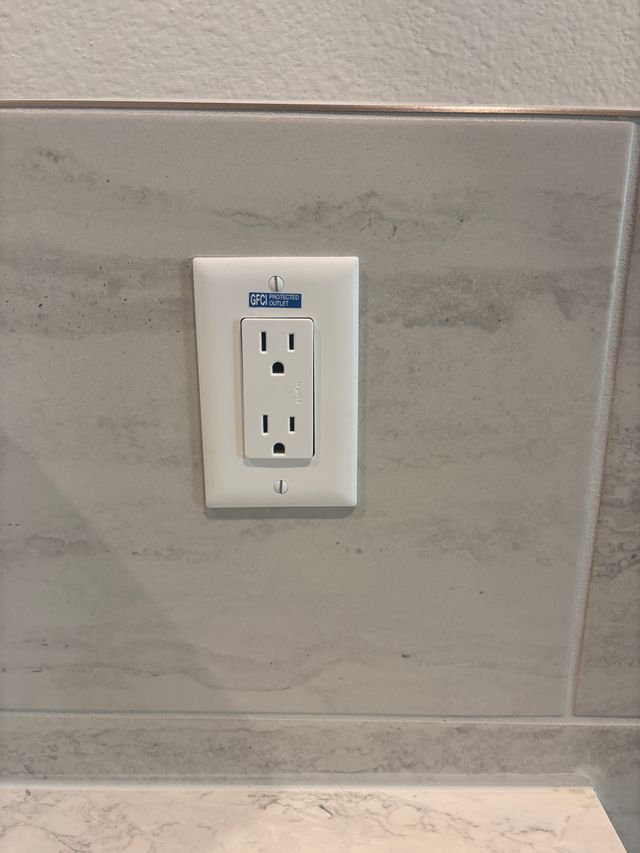
Reversed line and load connections are the single most common installation error we find on tripping GFCI devices. Every GFCI receptacle has a line side that accepts incoming power and a load side that feeds downstream outlets, and swapping them leaves the device unable to protect anything correctly. Some units will appear to work, some will trip the moment they are reset, and some will provide no protection at all while looking perfectly normal. Modern devices manufactured after the 2015 update to UL 943 will not reset when they are miswired, which is a genuine safety improvement. If your outlet was recently replaced and started tripping immediately afterward, wiring orientation is the first thing to verify. A licensed electrician confirms this in minutes with a receptacle tester and a voltage meter. Correcting the connection often restores normal operation without any new parts.
Shared neutral conductors create nuisance tripping that no amount of outlet replacement will solve. In a multiwire branch circuit, two hot conductors share a single neutral, and if a GFCI is installed on only one of those hots, the returning current no longer balances at the device. The GFCI interprets that imbalance as leakage and opens the circuit. This wiring style appears frequently in homes built in the 1970s and 1980s, and it also shows up when a well meaning remodeler borrows a neutral from a nearby circuit. The correct fix involves separating the neutrals or installing a two pole GFCI breaker at the panel. Guessing at this configuration is dangerous because a shared neutral can carry current even when one breaker is off. Panel level work of this kind belongs with a master electrician who can trace the circuit from the breaker forward.
Loose terminations degrade slowly and produce tripping that gets worse over months. Backstabbed connections, where a conductor is pushed into a spring clip on the back of a device instead of secured under a screw, are notorious for loosening as copper expands and contracts with load. A loose neutral in particular allows current to seek alternate return paths, and the GFCI reacts accordingly. You may also notice warm cover plates, flickering vanity lights, or a faint buzzing sound near the box. Those symptoms move the problem out of the nuisance category and into the fire hazard category. Aluminum branch wiring found in some homes built between 1965 and 1973 raises the risk further because of oxidation at the terminals. Any of these findings warrants prompt electrical repair rather than another reset.
Appliances and Devices That Cause a Bathroom GFCI Outlet to Trip
Hair dryers are the number one appliance culprit, and the reason is mechanical rather than mysterious. The heating element inside a dryer is a bare coil of nichrome wire suspended on insulators, and hair, lint, and moisture accumulate on that coil over years of use. Contaminants create a partial path from the element to the metal housing, and the GFCI detects the resulting leakage the instant the dryer reaches full heat. Many hair dryers include their own ALCI plug, and a failing ALCI can also trip the upstream receptacle. Testing the theory is simple: unplug every device in the bathroom, reset the outlet, and reintroduce items one at a time. If the trip follows a specific appliance to a different room, the appliance is the problem and should be replaced.
Motor driven equipment produces leakage that increases as the motor ages. Bathroom exhaust fans, combination fan and heater units, electric towel warmers, and even some electric shavers develop insulation breakdown in their windings after years of running in humid air. The leakage may sit just under the trip threshold for months and then cross it on a particularly muggy afternoon. Fan and heater combinations draw significant current and generate real heat, which accelerates the decline. If your outlet trips only when the exhaust fan runs, the fan motor deserves inspection before anything else. Replacing a tired ventilation unit often solves both the tripping and the humidity problem that contributed to it.
Cumulative leakage across a long circuit produces tripping with no single guilty device. Every appliance leaks a tiny amount of current by design, usually well under one milliamp, and every foot of cable contributes a small capacitive leakage of its own. Stack a hair dryer, a phone charger, an exhaust fan, a heated towel bar, and two hundred feet of branch circuit wiring together, and the total can approach the four to six milliamp threshold. Nothing is broken, yet the device trips because it is measuring exactly what it was built to measure. The solution is usually circuit redesign rather than component replacement, and that may mean adding a dedicated 20 amp circuit for the bathroom receptacles. Our team evaluates load distribution and can install a properly isolated circuit and a new GFCI outlet sized for the space. That approach eliminates the tripping permanently instead of trading one workaround for another.
How to Troubleshoot a Bathroom GFCI Outlet That Keeps Tripping
Safe troubleshooting follows a sequence, and skipping steps wastes time and money. Start by separating the outlet itself from everything connected to it, then move outward to the circuit, and finish at the panel. Never remove a cover plate or a device without confirming the circuit is de energized at the breaker and verifying with a meter. Keep in mind that a GFCI protects downstream receptacles, so your inspection area extends well beyond the bathroom wall. Write down what you find at each step, including the weather, the time of day, and which appliances were running. That record becomes genuinely valuable if a licensed electrician takes over, because intermittent faults are the hardest to catch in a single visit. Most homeowners can safely complete the first two stages, and the third belongs with a professional.
The First Steps to Troubleshoot a Tripping Bathroom GFCI Outlet
Begin by unplugging every device on the circuit, including chargers, night lights, and anything plugged into a downstream receptacle. Press the RESET button firmly and listen for a solid click. If the device holds with nothing connected, you have confirmed the outlet and its wiring are functioning and the fault lives in something you plugged in. Reconnect items one at a time, waiting several minutes between each, and run each device at full power. A hair dryer should be tested on its highest heat setting because leakage rises with temperature. When the trip occurs, you have isolated the offending appliance and the repair costs you nothing beyond a replacement.
If the device will not hold a reset with everything unplugged, the fault is in the wiring or the device itself. Turn off the breaker feeding the bathroom circuit and check every other receptacle in the house for lost power, which reveals what sits downstream of the GFCI. Pay particular attention to exterior outlets, garage outlets, and receptacles in adjacent bathrooms, since those are the common downstream locations. Inspect each one for water intrusion, corroded contacts, cracked covers, or insect nests inside the box. A single wet exterior receptacle explains a surprising percentage of stubborn bathroom trips. Dry the box thoroughly, replace any damaged cover, and attempt the reset again after the box has aired out.
Check the age and condition of the GFCI device before assuming a deeper problem. Most manufacturers rate these receptacles for a service life of roughly ten to fifteen years, and units in humid bathrooms often fall short of that. Look for a manufacture date stamped on the device body, discoloration around the slots, a loose or spongy feel to the buttons, or an indicator light that stays lit after a reset. Devices built to the 2015 UL standard perform an automatic internal self test and deliberately lock out when the sensing circuitry fails. That lockout is the device telling you it can no longer protect you, and forcing it back into service is not an option. Replacement with a matching amperage device is the correct response, and it must be installed with the line and load connections in the right orientation.
How to Test a Bathroom GFCI Outlet and Confirm It Still Works
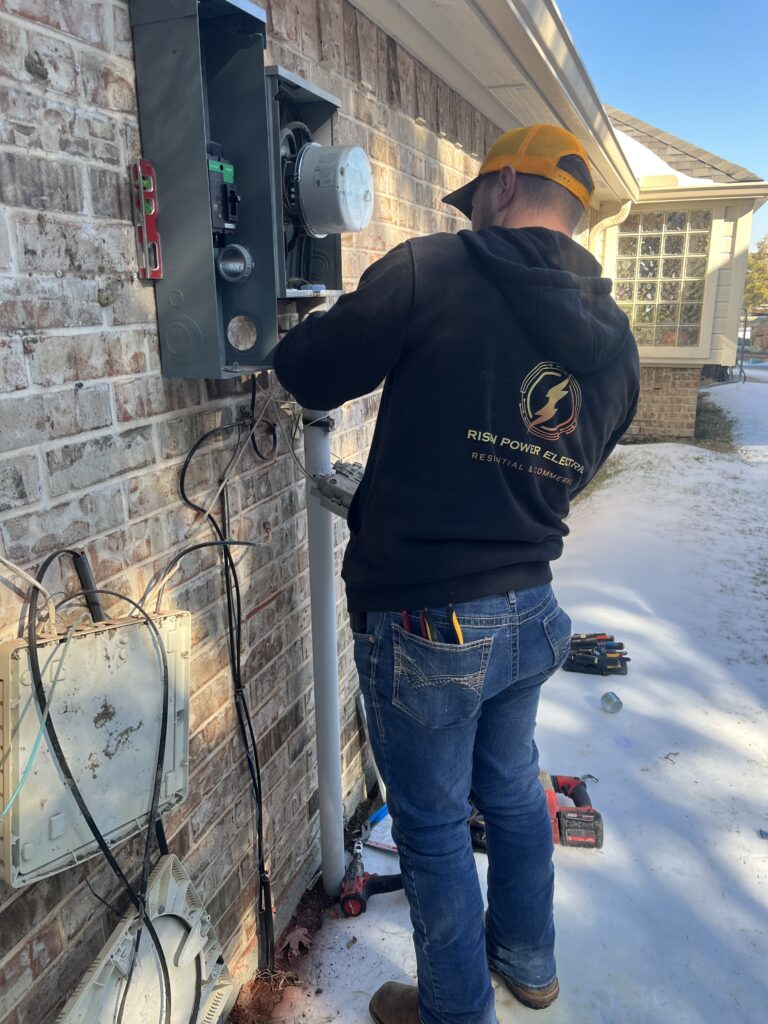
Monthly testing is a manufacturer recommendation that almost nobody follows, and it takes about fifteen seconds. Plug in a lamp or a small radio, press the TEST button, and confirm the device cuts power immediately. Press RESET and confirm power returns. A device that does not trip when tested has failed in the most dangerous way possible, because it is delivering power without protection. A device that trips but will not reset has either detected a real fault or reached the end of its service life. Either result gives you actionable information, and both take less than a minute to gather.
Plug in testers with a GFCI test button offer a second layer of verification, though they come with an important limitation. These testers work by creating a small leakage path from hot to ground, which means they will not trip a GFCI installed on a circuit without an equipment grounding conductor. Many older homes in Hunt and Rains County still have two wire circuits with no ground, and the code permits a GFCI receptacle as a replacement in those locations with proper labeling. In those installations, only the built in TEST button provides a valid check. Understanding which situation you have prevents a false conclusion that the device has failed. An electrician can confirm the grounding arrangement quickly and label the receptacles correctly.
Document the pattern rather than just the event, because intermittent faults reveal themselves through timing. Note the date, the outdoor conditions, the indoor humidity, which appliances were running, and how long the outlet stayed on before tripping again. Trips that cluster after rainfall point toward an exterior receptacle or damaged cable. Trips that follow shower use point toward condensation or ventilation. Trips that occur at random with nothing plugged in point toward a failing device or a wiring fault inside a wall. This kind of log turns a frustrating mystery into a solvable diagnostic problem and shortens the time an electrician needs on site.
When a Tripping Bathroom GFCI Outlet Needs a Licensed Electrician
Certain findings end homeowner troubleshooting immediately. Burning or acrid smells, scorch marks on the device or cover plate, a receptacle that feels warm to the touch, visible melted insulation, or a buzzing sound from the outlet or panel all indicate active arcing or overheating. Arcing faults reach temperatures capable of igniting wood framing and insulation in seconds. Turn off the breaker, leave it off, and call for service rather than attempting another reset. Risen Power Electric offers 24/7 emergency electrical service for exactly these situations. Waiting until morning with a smoldering connection inside a wall is a gamble no homeowner should take.
Panel level symptoms also require professional attention. A breaker that feels hot, a panel that hums, tripping across several circuits at once, or lights that dim throughout the house when a bathroom appliance runs all suggest a problem upstream of the outlet. Loose bus connections, a failing main lug, or a compromised service neutral produce exactly these symptoms and cannot be diagnosed from the receptacle. Utility side neutral faults are more common than most people expect and create dangerous voltage imbalances between circuits. Only a licensed electrician with proper test equipment should open a panel cover. The work carries arc flash risk that ordinary tools and gloves do not address.
Any home with aluminum branch circuit wiring, knob and tube wiring, or ungrounded two wire circuits deserves a professional evaluation before parts get swapped. These systems have specific code requirements for device compatibility, and installing the wrong receptacle creates a hazard that looks perfectly fine from the outside. Aluminum conductors require devices marked CO/ALR or approved pigtail connectors rated for the application. Knob and tube installations frequently have brittle insulation that fails when disturbed. A master electrician evaluates the existing system, explains the options honestly, and recommends only what the situation actually requires. Our team performs this evaluation without pressure and gives you a clear picture of what you are working with.
Why You Need a Professional to Fix a Bathroom GFCI Outlet That Keeps Tripping
A GFCI outlet that trips repeatedly is a warning, and the worst possible response is to bypass it or swap it for a standard receptacle. That shortcut removes the only shock protection standing between you and a wet bathroom floor, and it violates code in every jurisdiction in Texas. Professional diagnosis identifies the actual leakage path instead of hiding the symptom, which protects your family and your home. A proper service call includes circuit mapping, insulation testing, device evaluation, and a clear explanation of what was found. You end up with a permanent solution and documentation of the work. That combination is worth far more than another trip to the hardware store for a part that may not be the problem.
The Safety Value of Professional Bathroom GFCI Outlet Repair
Ground fault protection exists because bathroom electrocutions were once tragically common in American homes. The four to six milliamp trip threshold sits well below the current level that causes ventricular fibrillation, which is the mechanism behind most electrical deaths. Every unnecessary reset of a tripping device is a moment when that protection was tested and something real was detected. Professional repair addresses the leakage path itself, restoring the safety margin the device was designed to provide. That outcome is not something a replacement receptacle alone can deliver.
Hidden faults carry fire risk in addition to shock risk. Damaged cable insulation, loose terminations, and overheated connections produce heat inside enclosed wall cavities where nobody can see it. Electrical failures remain a leading cause of residential structure fires in the United States every year. Finding and correcting the fault early costs a fraction of what fire damage costs. A thorough diagnostic visit turns an invisible problem into a documented and repaired one.
Code compliance protects you at resale and at claim time. Insurance adjusters and home inspectors both examine GFCI protection in bathrooms, kitchens, garages, and exterior locations. Improvised repairs and missing protection show up quickly and create real problems during a transaction. Work completed by a licensed master electrician produces a record that stands up to scrutiny. That documentation has genuine value long after the repair is finished.
What to Expect During a Bathroom GFCI Outlet Service Call
Our electricians begin by listening to your description of the tripping pattern, because that history narrows the search considerably. We then map the circuit to identify every receptacle protected by the device, including outlets in other rooms and outdoors. Voltage, continuity, and insulation resistance testing follow, along with a visual inspection of terminations and enclosures. Each finding gets explained in plain language as we go. You will know what is wrong before any repair begins.
Repair recommendations are presented with options and honest pricing rather than pressure. Some situations call for a simple device replacement, others require correcting downstream wiring, and a few need a dedicated circuit installed from the panel. We explain the reasoning behind each option and the trade offs involved. Risen Power Electric waives the diagnostic fee when we handle the repair. Nobody on our team earns anything by selling you something you do not need.
Completed work is tested in front of you before we leave. We verify correct line and load orientation, confirm the TEST and RESET functions operate properly, and check every downstream receptacle for proper protection. We also review the monthly testing routine so you can monitor the device yourself. If the underlying cause was ventilation or an aging appliance, we will say so directly. Our goal is a bathroom circuit that stays on and stays safe.
Why Choose Risen Power Electric for Bathroom GFCI Outlet Repair
Risen Power Electric is a master electrician owned company serving Lone Oak, Emory, Point, West Tawakoni, Quitman, Commerce, Terrell, Royse City, Caddo Mills, Wolfe City, Canton, Forney, Mineola, and Sulphur Springs. We are licensed and insured, and we treat every home as though the wiring behind the wall belongs to our own family. Clear communication is part of the job, not an afterthought. You will always know what we found, what it costs, and why it matters.
We built this company on honest recommendations and long term safety rather than upselling. Diagnostic fees are waived when we perform the repair, and veteran discounts are available on our services. Emergency electrical service is available around the clock, because ground faults and arcing do not keep business hours. Our focus stays on doing the work correctly the first time.
Is your bathroom GFCI outlet tripping over and over? Do not keep resetting it and hoping the problem goes away, because that device is detecting something real every single time. Call Risen Power Electric at (903) 413-7186 or email keith@risenpowerelectric.com to schedule a diagnostic visit, and let a licensed master electrician find the actual source. We will trace the circuit, repair the fault, and restore the protection your bathroom is supposed to have.